Can AI Read the Public's Desires?
Can AI read the desires of the public?
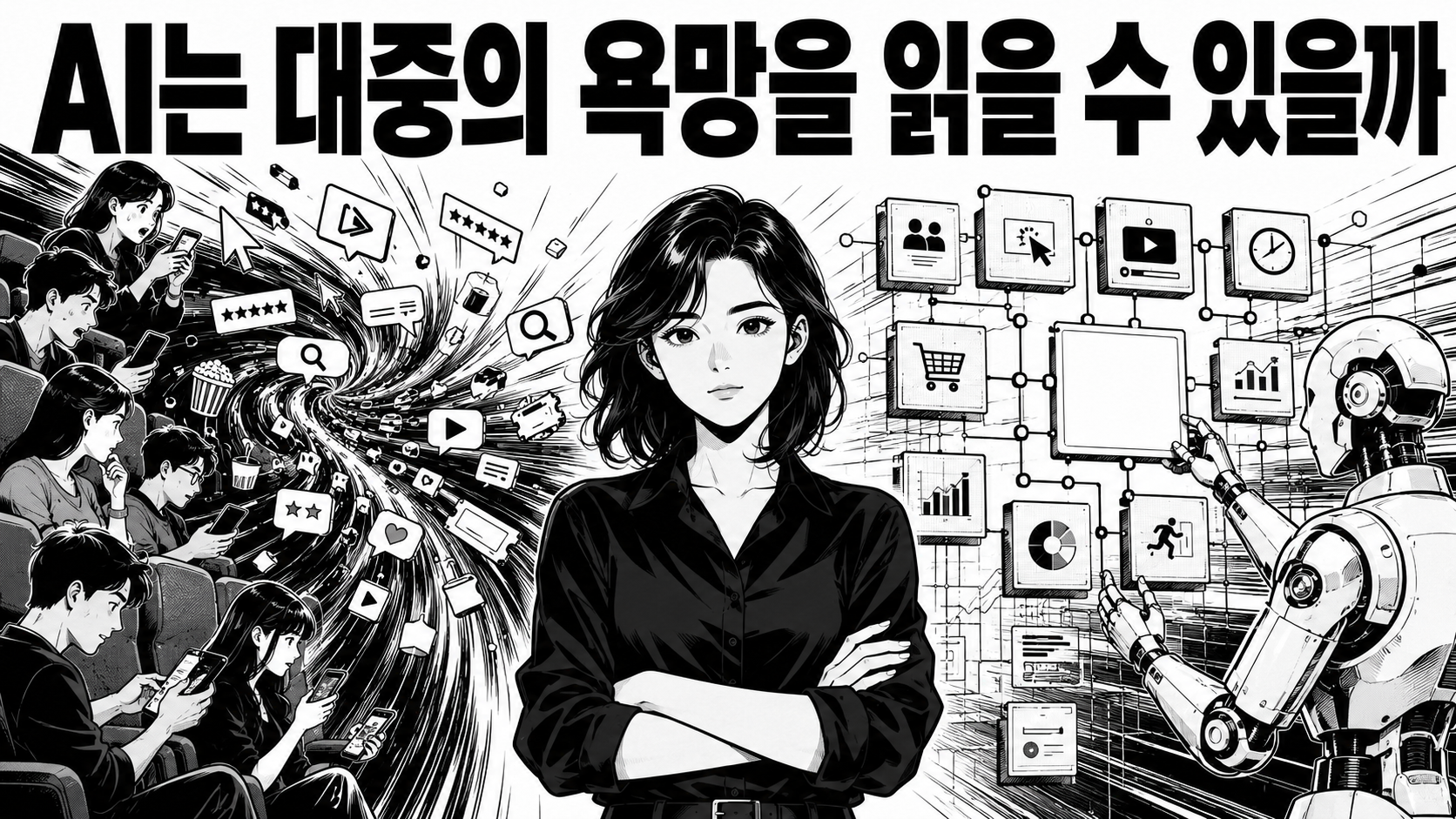
What AI reads is not the public's desires themselves, but the traces of their reactions and behaviors.
Recently, director Na Hong-jin's<호프>made me think this.

Why do some directors know what the audience wants but don't give it to them?
A director has a film they want to make. The audience has a film they want to see in theaters. When these two desires meet, it becomes a good film, but if it leans too much to one side, the work becomes either the director's monologue or a product that merely caters to the audience's tastes.
For me,<파묘>was a film that struck this balance quite well. The director's desired world was clear, but it also didn't miss the genre-specific pleasure the audience expected. On the other hand, in some films, the director's desires are so prominent that there's little room for the audience.

Then, director Jang Hang-jun's<왕과 사는 남자>came to mind.

Directors who make popularly loved films are sometimes lightly regarded, while those who create works that keep a distance from the audience are easily called masters. This creates a strange paradox.
It's a moment when so-called B-movie directors make blockbusters, and masters seem to be making B-movies.
Of course, the value of a film cannot be judged solely by audience numbers. Box office success doesn't guarantee artistic merit, nor does box office failure necessarily mean the work is a failure. However, one question remains:
Is a film the director's desire, or the audience's desire?
And can AI provide an answer to this age-old question?
Wouldn't AI be able to figure out what the public wants?
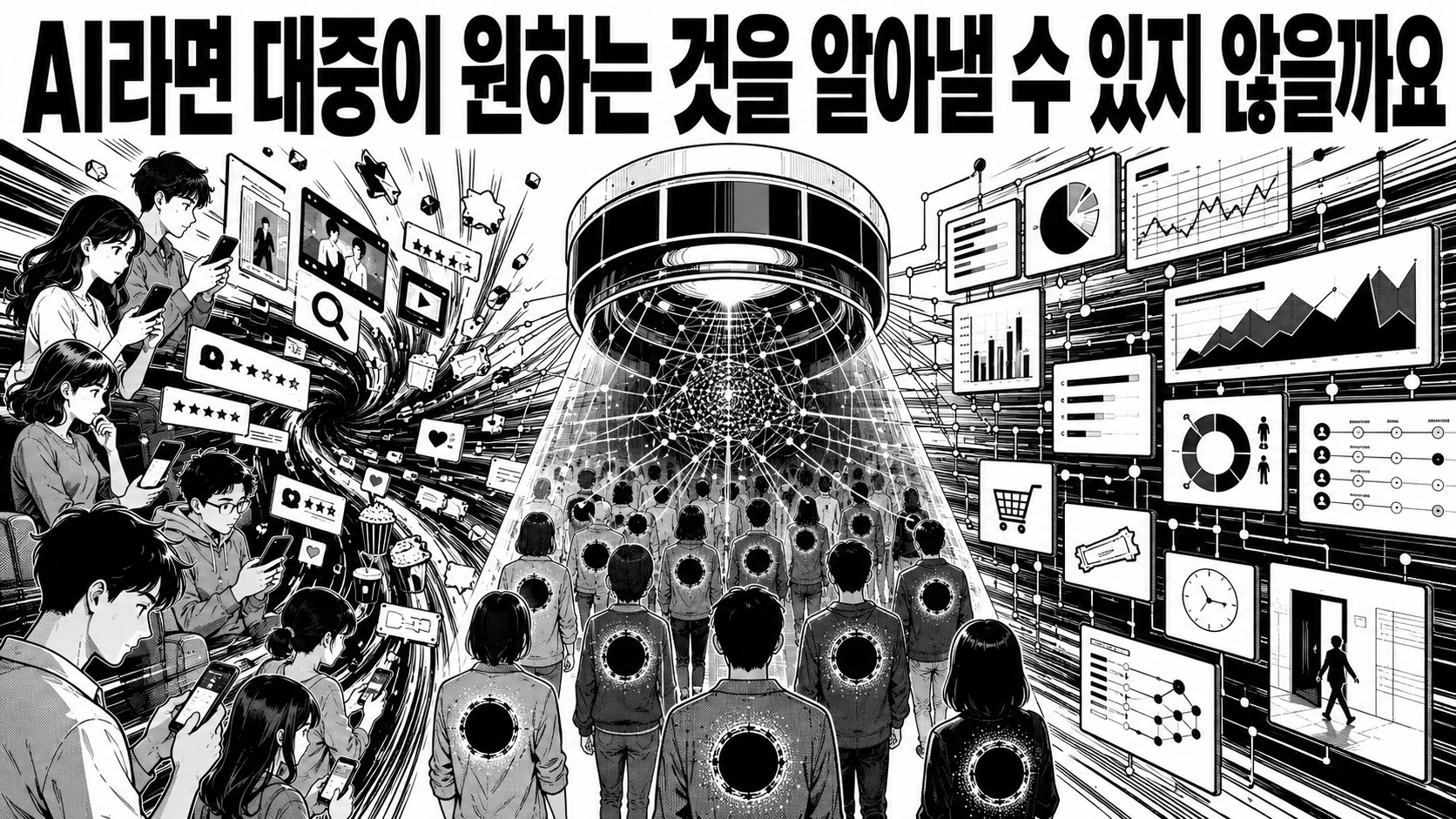
The content industry now possesses an unprecedented amount of audience data compared to the past.
It can know everything: what titles were searched, what posters were clicked, how many minutes were watched, at which scenes people paused, if it was watched to the end, if it was rewatched, if it was shared with friends, and if the next work was purchased.
There are also comments and reviews. AI can read hundreds of thousands of reactions and classify emotions. It can quickly summarize which actors people like, which scenes they find boring, and what topics they react to.
With this much information, it seems possible to figure out what kind of movies the public wants.
However, in reality, it's not that simple.
This is because what AI reads is not the public's desires themselves, but the traces of their reactions and behaviors.
Those who leave comments are not the entire audience. Generally, people who are very satisfied or very angry speak up more actively. If you only analyze ratings and reviews, a vocal minority might appear to represent the entire audience.
Behavioral data isn't always the truth either. A click might indicate interest, but not satisfaction. It's hard to tell if a long watch time means deep engagement or just background playback. An increase in search volume doesn't necessarily mean an increase in actual purchase intent.
Words left by people are part of their desires, and behavioral data is also part of their desires. Neither one represents the entirety of desire.
What happens when clicks are mistaken for desires
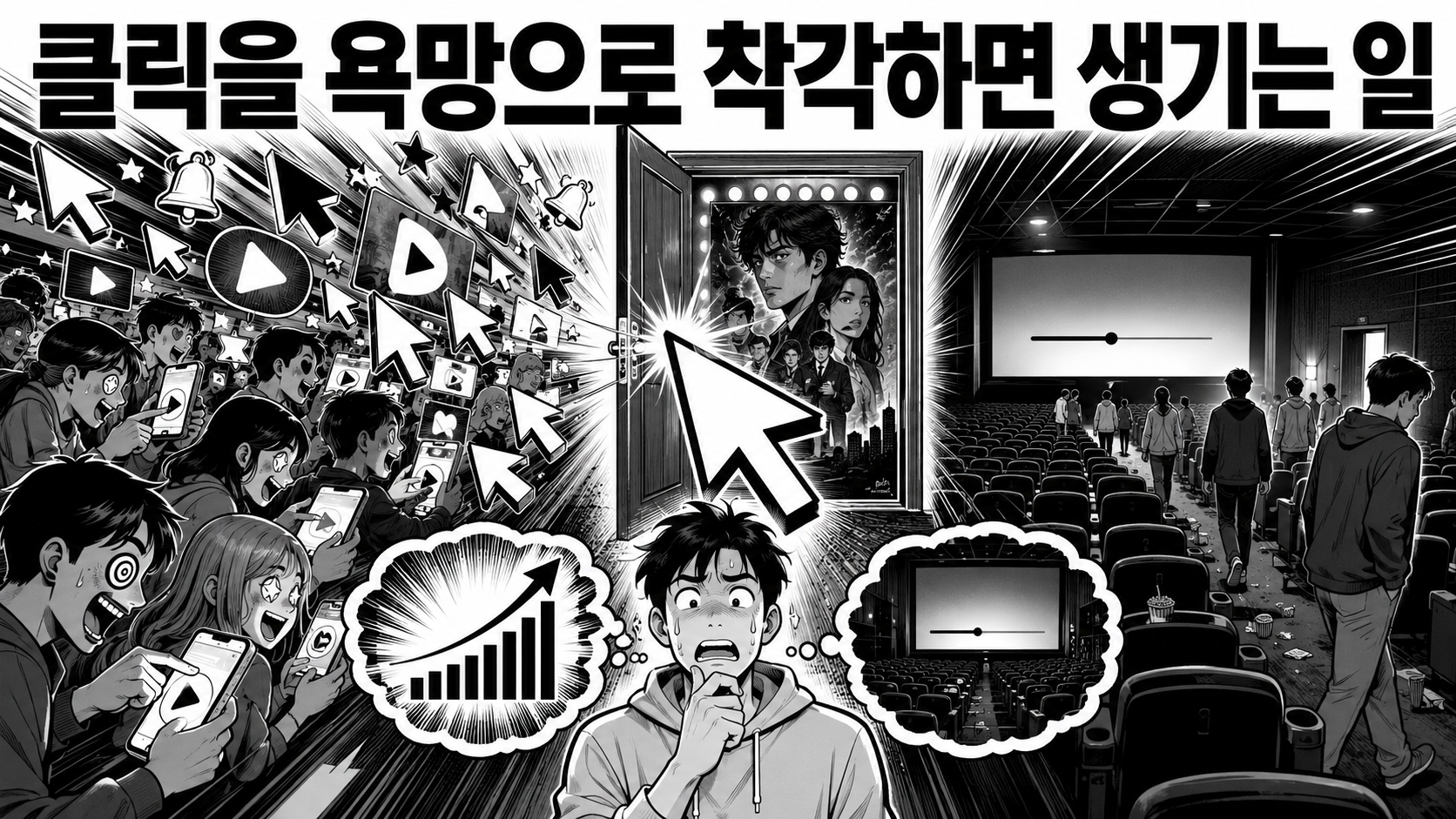
YouTube once considered clicks a key success metric. They believed that videos with many clicks were good videos.
However, optimizing for clicks led to an increase in sensational titles and thumbnails. While clicks increased, they didn't necessarily translate into satisfying viewing experiences. Ultimately, YouTube began to prioritize watch time and satisfaction signals over just clicks.
When the measurement metrics changed, the content displayed by the platform also changed.
This case is important not because AI was wrong. AI, in fact, executed its given objective too faithfully. The problem lay in humans defining clicks as desires.
Netflix's personalized posters are similar. Even for the same work, the selection rate can vary depending on which image is shown to whom. AI excels at finding out which audience members react to which images.
But this is not an answer to what kind of story should be created.
What AI discovers is 'how likely this person is to click on a work presented in a certain way,' not 'what new story this person will come to love.'
Spotify's personalized recommendations also showed interesting results. While refining recommendations increased usage, it was observed that the diversity of content individuals encountered actually decreased.
AI is better at finding things I might like. At the same time, it can keep me immersed in a world similar to what I already liked.
A technology that excels at reading public desires can also become a technology that narrows them.
AI reads demand, but cannot judge it.
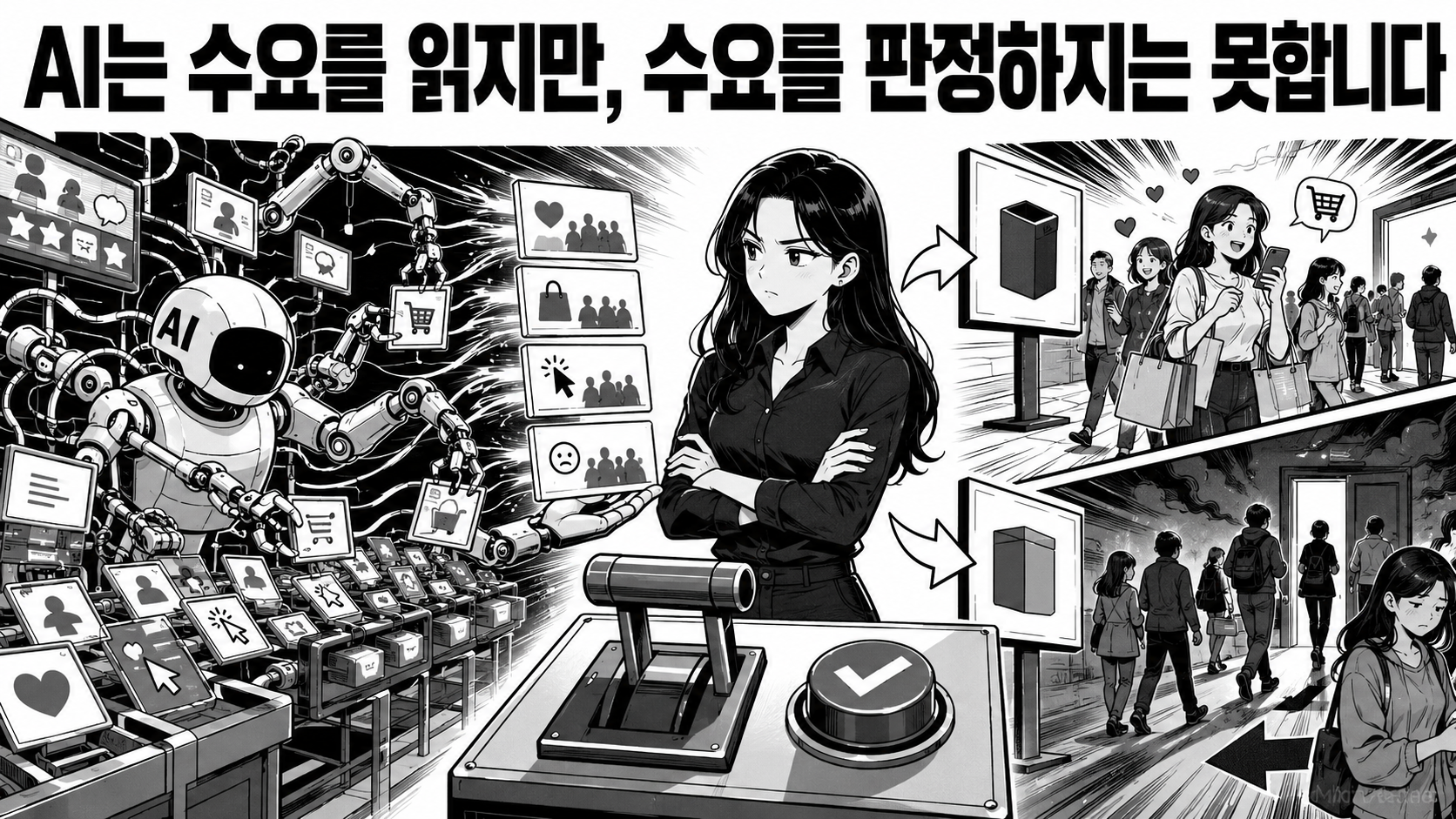
The role of AI in analyzing consumer reactions can be divided into four stages.
The first is sentiment analysis. It distinguishes whether people are speaking positively or negatively.
The second is customer insights. It identifies why people like something, what they find inconvenient, and what recurring problems emerge.
The third is demand signals. It verifies whether behaviors like searches, clicks, adding to cart, purchases, repeat visits, and churn have actually changed.
The fourth is decision-making. It determines whether to change a product, adjust pricing, invest in a work, or what message to use when launching it to the market.
Many companies mistakenly believe they've reached the fourth stage after completing only the first and second stages.
We analyzed customer reactions with AI.
Positive reactions are high.
There are many mentions of this feature.
However, a high volume of mentions is different from an actual willingness to pay. Positive reactions are not the same as purchases, repeat visits, or recommendations.
AI is strong at reading demand, but weak at judging it.
Judgment requires representativeness correction. It must be contrasted with actual behavioral data. And, if possible, causal relationships should be confirmed through A/B tests or limited releases.
Customer words provide candidates for 'why'.
Customer actions show 'what happened'.
AI quickly connects the two to form hypotheses.
But the final judgment is made by experiments.
The best examples are not cases where AI got the right answer.
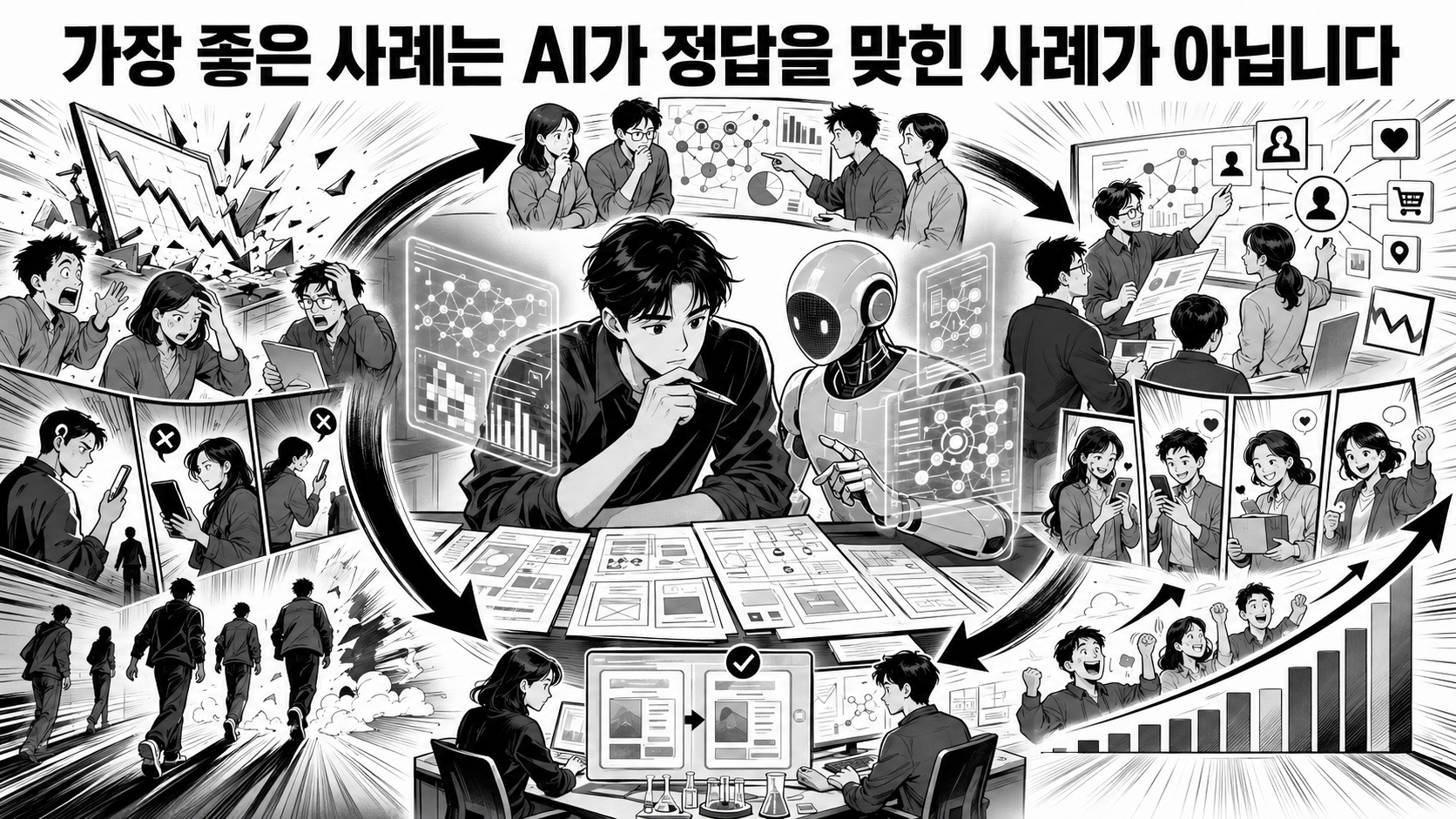
One of the most impressive cases in this research was Etsy.

( https://www.etsy.com a global marketplace specializing in handmade and craft items)
Etsy applied AI models to improve search and recommendation rankings, but it wasn't successful from the start. Initial experiments didn't yield the expected results, and they subsequently conducted new online experiments by adding new features and signals.
The important thing is not that AI guessed the customer's desires on the first try.
It's that they didn't hide failed results, re-examined what signals were missing, revised the model, and then re-verified it with actual user behavior.
What AI did well was not to declare the right answer, but to enable humans to form hypotheses and verify them more quickly.
Similar cases are seen in customer support. When AI reads numerous consultation logs and categorizes recurring issues, companies can much more quickly see where customers are getting stuck. It can also recommend consultation phrases or automatically handle repetitive inquiries, reducing response times.
However, reduced consultation time is different from a customer's problem being resolved. A higher automated response rate is also different from an improved customer experience.
To judge the success of AI adoption, one must look at 'how customer behavior and business results have changed,' rather than 'how much has been automated.'
What AI can do well in film
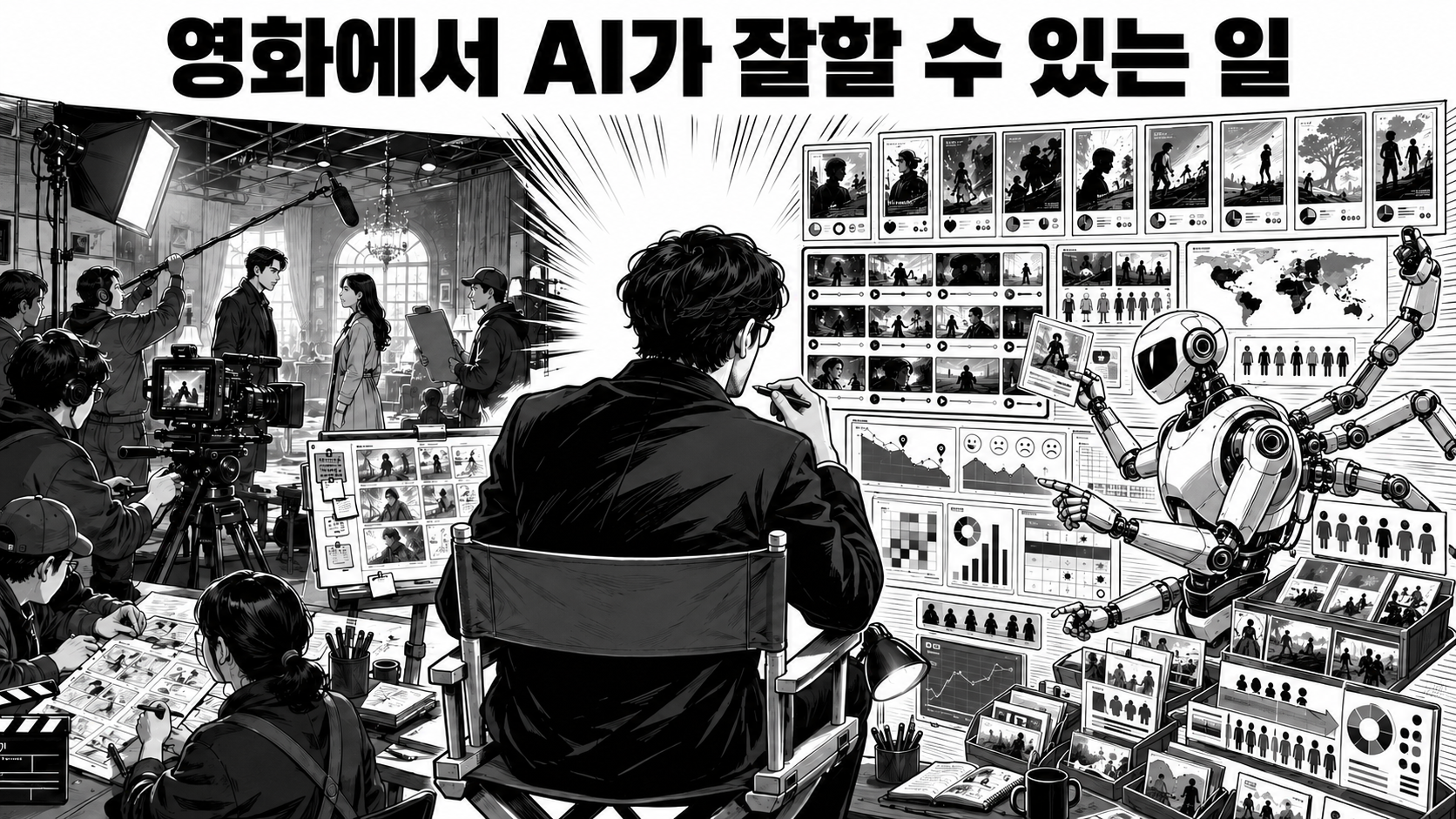
So, to what extent should AI be involved in film?
AI can greatly help in checking the implicit contract between the audience and the work.
It can identify which audience segments react to a particular subject, which posters and trailers accurately convey the work's appeal, at what points audiences feel emotions different from their expectations, and which genre conventions they feel were not met.
It is also useful when deciding how and to whom to deliver an already created work, such as distribution timing, marketing messages, trailer composition, target audience, and recommendation methods.
On the other hand, there are things AI doesn't do well.
Why this story needs to be made now, how to show a world that doesn't yet exist, or how to make an audience follow unfamiliar emotions to the end—these are difficult to decide based solely on data.
Data is strong at figuring out what audiences reject. But it doesn't know why audiences will come to love something they haven't experienced yet.
This difference is the space for creation.
AI amplifies already revealed desires.
Creators discover desires that have not yet been named.
Jang Hang-jun and Na Hong-jin, who is the better director?

In fact, there is no answer to this question.
Director Jang Hang-jun and Director Na Hong-jin differ in how they approach the audience and the magnitude of their own desires they infuse into their films. One might prioritize the implicit contract with the audience, while the other might push their created world to the very end, even if the audience finds it difficult to enter.
Both are the director's choices.
However, it's hard to agree with the view that the ability to understand and satisfy audience desires is somehow inferior to artistic merit.
Making people laugh, cry, and keeping them engaged in a story for two hours is by no means a trivial skill. It's also strange to undervalue a director's achievement simply because it gained popularity, or to grant higher artistic authority to a work just because it's difficult for the audience to understand.
Conversely, merely repeating already successful formulas just because the public wants them can hardly be called creation.
Ignoring the audience leads to a monologue.
Only following the audience leads to replication.
I believe a good film is one that endures the tension between these two.
<파묘>was interesting for this very reason. It didn't abandon the director's world while also delivering the emotions and genre-specific pleasures that audiences expect in a theater.
AI cannot decide this balance. However, it can serve as a mirror, showing which way things are leaning too heavily.
This issue isn't just about film.
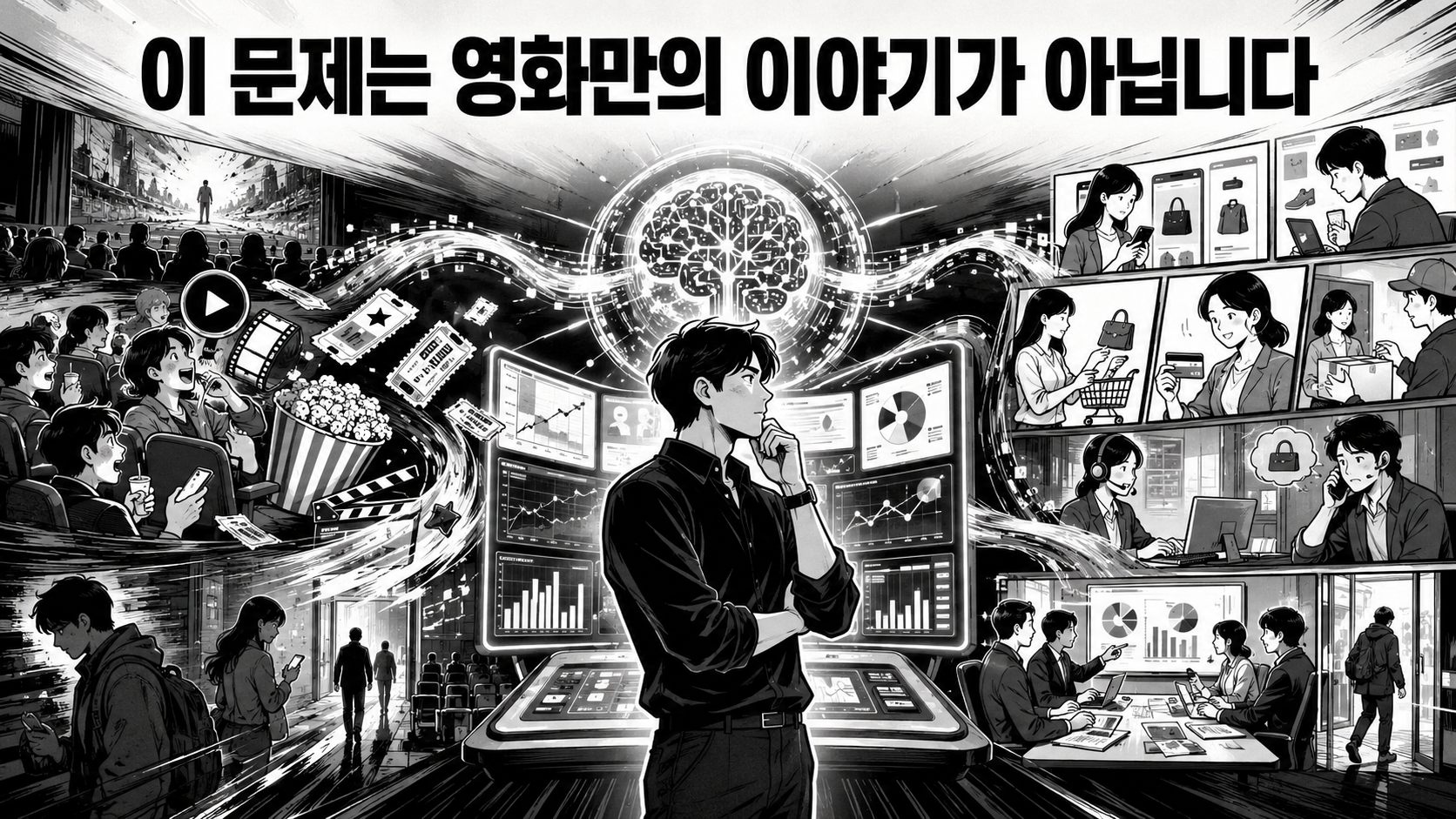
Businesses make the same mistakes every day.
They conduct surveys, collect reviews, and analyze VOC (Voice of Customer) to ask what customers want. Now, they feed all that data into AI to summarize it at once.
And they believe the summarized sentences represent customer desires.
However, what customers say, what they actually do, and what they pay for can all be different.
Therefore, AI-based consumer analysis should not end with generating reports.
If recurring complaints are found in comments, it's necessary to check if they correlate with actual churn. If there are many requests for a specific feature, one must see how many of the total customers made those requests. If positive reactions are high, it needs to be verified whether they lead to purchases and repeat visits.
Insights generated by AI should be the starting point for experiments, not the conclusion.
USLab AI's perspective on AX is the same.
Summarizing thousands of customer reactions with AI is no longer a difficult task in itself. What's more important is how that summary changes decision-making, how it's reflected in actual work and products, and how the results after implementation will be learned from again.
If AI analysis stops at dashboards and reports, it's merely faster reporting.
Only when AI analysis leads to hypotheses, experiments, decision-making, and execution results does a company's learning speed truly change.
Who creates the desires that AI cannot read?
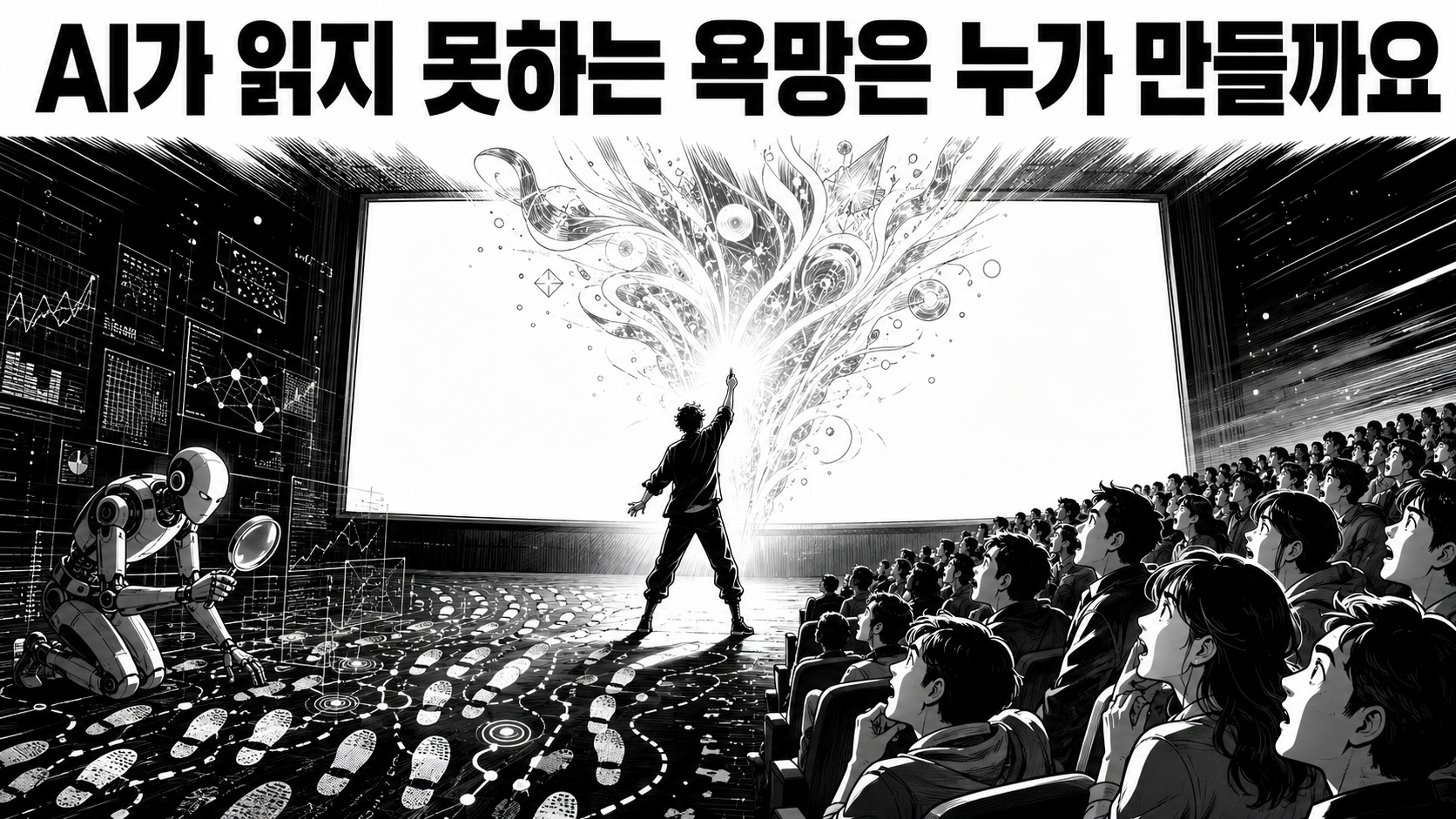
In the age of AI, we can read the desires of the public much faster than in the past.
But to be precise, what AI reads is where desires have already passed.
Search terms, clicks, watch time, purchases, churn, and comments are all traces of desire. AI can collect, classify, and connect these traces faster than anyone.
However, traces always originate in the past.
New films, new products, and new cultures begin where there is no data yet. People cannot say they want something before experiencing it. Sometimes, it's only after a creator shows it first that people realize, 'This is what I wanted.'
Therefore, even in the age of AI, the desires of directors, planners, and entrepreneurs are necessary.
However, one should not solely push their own desires. It's important to read the signals left by the public, identify what might be missing, and experiment where necessary.
One should neither ignore the audience's desires nor blindly obey them.
AI is not a technology that eliminates that tension.
Rather, it's a technology that reveals that tension more clearly.
AI's role is not to declare desires on behalf of the public. It is to help humans more quickly see what people reacted to, where they left off, and what choices they repeatedly made.
And what to create based on those signals is still up to humans.
AI is strong at discovering existing desires.
But bringing desires that don't yet exist into the world.
That is the work of the creator, and perhaps the true role of a master.