Why Couldn't the Ex-OpenAI Genius Investor Avoid a Margin Call?
Why did the investor who saw the future of AI have to sell their stocks?

A young investor who was predicting the future of AI sold most of their stocks in just one day. This refers to the incident where Leopold Aschenbrenner's fund, formerly of OpenAI, sold most of its public equity portfolio to Citadel in July 2026.
The reason is simple. When stock prices plummeted, the lenders demanded, “Either inject more cash now or sell your stocks.” This is known as a margin call. The fund ultimately sold stocks to reduce its debt.
What's important isn't whether he misjudged the future of AI. This fund rose approximately 439% year-to-date by the end of June but fell about 67% in July alone. Even if a long-term outlook is correct, without enough cash to withstand a month of sharp decline, that outlook cannot be held to its conclusion.

The one-line conclusion of this article is this:
Predicting the future and enduring until that future arrives are different skills.
Related Evidence · Reuters Report · WSJ Incident Report · Situational Awareness LP Official Introduction · Aschenbrenner's 2024 Report
What he traded wasn't 'AI' itself, but AI's bottlenecks.
Aschenbrenner's idea was this: as AI grows, it will require not just GPUs, but also more electricity, data centers, cooling systems, and memory. Therefore, the fund placed significant bets on power companies, data centers, and AI infrastructure firms.
Simply put, he wasn't betting on 'AI taking off,' but rather on 'what would become scarce to actually run AI.' At the same time, he held options on some semiconductor stocks to hedge against declines. It was less a fund that saw AI as universally good, and more one that tried to differentiate between what would rise and what had become too expensive within the AI boom.


Thus, this incident is less about 'AI prediction failure' and more about 'executing a good idea in an overly risky manner.'
Related Evidence · Situational Awareness 13F Filing · SEC 13F Interpretation Guidance · Report Web Original
A margin call is not a mechanism to punish 'the wrong person.'

There's no need to overcomplicate margin calls. When the value of stocks bought with borrowed money falls, banks or brokerage firms say, 'It's not safe, so put in more money now.' If you don't have that money, you have to sell stocks to repay the debt.
At this point, investors even sell the stocks they believe in most. Even if they think it will rise in the future, they have money due today. A margin call is not a verdict that 'your outlook was wrong.' It's a question of 'do you have enough cash to wait for that outlook?'

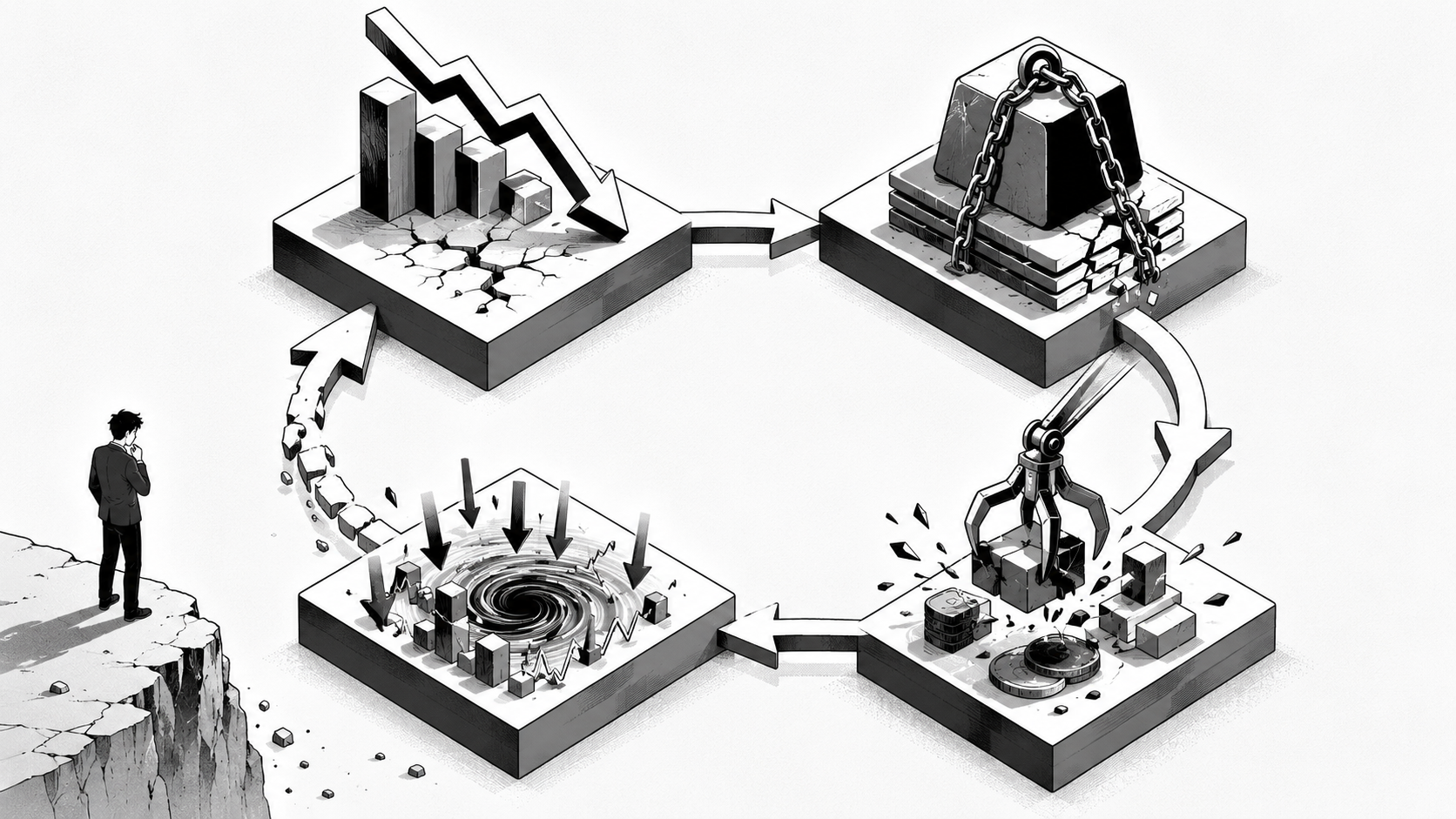
This vicious cycle is well-known in financial research. However, in this particular incident, it has not been disclosed which bank demanded how much, or what the exact contract terms were.
In leveraged investing, 'can I survive today?' comes before 'will I be right someday?'
It's 'Can you provide cash until that conclusion arrives?'
Related Evidence · BIS, prime broker–hedge fund nexus · Brunnermeier & Pedersen, Market Liquidity and Funding Liquidity · FINRA margin accounts guidance
It's neither Archegos nor LTCM. Still, there are lessons to be learned.

This incident should not be equated with Archegos or LTCM. Both of those were major financial crises that caused much greater shock to banks and the market as a whole. The exact leverage of Aschenbrenner's fund and the losses per bank have also not been disclosed.
There are also significant differences. This time, Citadel acquired most of the public equities all at once, avoiding the worst-case scenario of multiple banks simultaneously dumping stocks onto the market. The fund also did not close down.
Nevertheless, one commonality is clear: if you bet too heavily on one side, stock prices fall, and borrowed money becomes unstable, even good investment ideas can become useless.
Related Evidence · SEC's Archegos Enforcement Announcement · Federal Reserve History's LTCM Commentary · August 4 Core Scientific 13D/A Filing
Kimi K3 was less a cause and more 'a question posed by the market.'

So why did AI-related stocks all shake at once? With the emergence of high-performance open models like Kimi K3, the market posed a question: 'If AI can run more cheaply and efficiently, should we still be spending so much on GPUs and data centers?'
However, it cannot be said that stock prices fell solely because of Kimi K3. Already, high stock valuations, the burden of AI investment costs, Chinese competition, and semiconductor supply concerns were all present. Kimi K3 was less a cause and more one of the triggers that amplified these anxieties.
Furthermore, the emergence of high-performance open models doesn't mean AI infrastructure becomes unnecessary. On the contrary, if more people use AI, demand for data centers and memory could increase. The market is still calculating the answer to that.
Related Evidence · Moonshot AI's Kimi K3 Official Announcement · Kimi K3 Official Repository · Reuters Market Report
What's needed before predictive ability is a 'structure to endure.'

It's still unknown whether Aschenbrenner's AI outlook was wrong. AI infrastructure investment and power demand are indeed increasing. However, when AGI will arrive and which companies will profit in that process are questions that remain unanswered.
Nevertheless, the lesson from this incident is clear. Simply getting the big direction right is not enough. You need the capital to endure until that direction becomes reality, methods to reduce risk, and an exit strategy if your initial idea proves wrong.
AI adoption by businesses is similar. Even if the statement 'AI transforms work' is true, it becomes risky to concentrate all tasks, authority, and costs on a single model and a single provider. You must design for whether the model can be changed, whether humans can intervene and stop it, and whether it can operate even if costs increase.
Those who predict the future and those who survive until that future arrives can be different.
Therefore, before predicting, you must create a 'structure to endure.'

Related Evidence · Aschenbrenner Official Biography · OpenAI's Stargate Announcement · FSB's Non-Bank Leverage Report
Sources and Factual Boundaries
This article is reconstructed based on 7 user-provided deep research pieces, prioritizing official filings, regulatory bodies, original fund/report documents, and Reuters, WSJ, and FT reports. Confirmed facts include Citadel's acquisition of most of the public equity portfolio, an approximate 67% loss in July, deleveraging to cover margin calls, and the fund's continued operation thereafter. The specific quantities of stocks transferred to Citadel, the total transaction value, exact leverage ratios, margin call amounts and collateral conditions per lending group, specific short selling, and direct causality of the incident have not been confirmed by public data alone, and thus are not asserted. This is not investment advice.