The Transformation Meta Muse Revealed

“Look at my schedule for next week and make an appointment. Also, find the necessary emails and draft replies.”
Until now, when asking AI for such tasks, it often only explained methods or wrote sentences. Muse, unveiled by Meta in September, is a personal AI agent that, with user permission, finds information in browser-connected apps and performs tasks like making reservations or purchases.
Initial reactions are enthusiastic, but it's not yet at a stage where all tasks can be entrusted to it with complete confidence. For now, it's more beneficial to examine Muse to understand the utility of agents and the challenges that remain.
From Answering to Executing: What Does Muse Do?
According to Meta, Muse opens a browser in a Secure VM, a user-specific cloud environment, and uses connected services and files. It fills out forms, gathers necessary information, and continues time-consuming tasks even after the app is closed. It's designed to request approval before important actions like sending emails or making purchases.
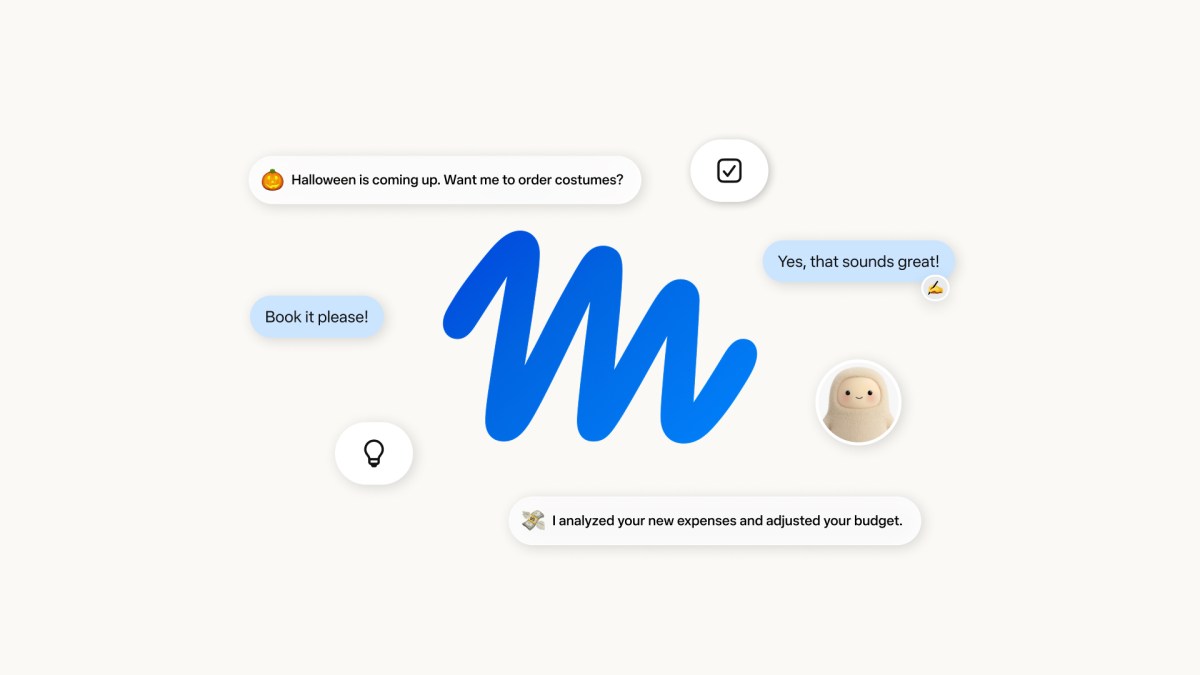
Official Meta Muse launch image. The message on the screen is an example of product usage.Image and Original Announcement
Muse and Muse Spark should be distinguished. Muse Spark is a foundational model family, while Muse is a personal agent service that combines a browser, connectors, and permission management on top of it. The fact that Meta AI can be used in Korea does not mean the official launch of the Muse personal agent in Korea.
Related Evidence·Meta Muse Launch Announcement·Meta Muse Announcement for Small Businesses
The first tasks to delegate are postponed chores.
Tasks that involve a person repeatedly navigating between screens, such as finding items to process in an inbox, checking for open slots in a schedule, and going through multiple steps on a booking site, are a good starting point. The provided research includes cases where a reporter used Muse to handle several childcare reservations and gathered old travel records from emails and calendars.

This is an AI illustration visualizing the flow from email verification to just before booking. It is not an actual Muse screen.
In actual use, human involvement is not absent. Users may need to handle login or payment input directly and verify the date, price, and counterparty information of the results. Early user surveys revealed success stories like negotiating communication fees or app creation, but also instances where tasks halted for extended periods or the agent re-asked for previously provided rules. It is appropriate to clearly state goals and stop conditions, and to compare completion reports with actual outcomes.
Related Evidence·Meta Feature Description·WSJ Real-world Usage Review· User cases refer to qualitative samples from the attached “Meta Muse User Response In-depth Survey” and do not represent the entire user experience.
The market's reaction isn't limited to just one app.
Immediately after its launch, Muse received a rapid initial response in app rankings and downloads. Reports citing estimates from market research firm Sensor Tower stated approximately 2.8 million downloads in the first two weeks. This figure indicates interest and early adoption but does not imply long-term usage rates or task completion rates.

Official Meta Connect 2026 image.Original text
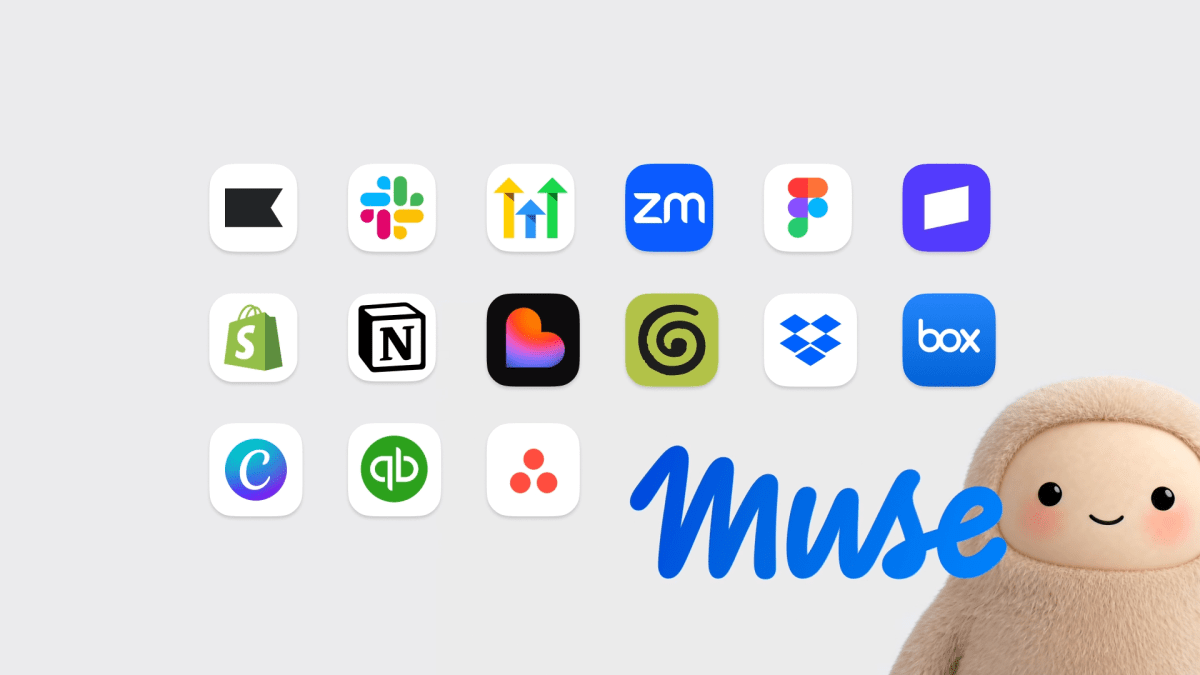
Meta's Muse Connector introduction image for small businesses.Original text
The longer-term change lies in connectors. Meta announced that it would connect business and e-commerce tools like Notion, Slack, and Shopify to Muse, and Stripe revealed how Muse processes payments in line with user approval. This effectively means that instead of users finding and opening apps one by one, they tell the agent their goal, and the agent calls the necessary services.
This changes the questions for businesses. Along with “How do we make our app discoverable?”, they must also consider “Can an agent safely use our services?”. However, which services will be chosen and who will profit from that path are still projections, not confirmed outcomes.
Related Evidence·Report on Initial Download Estimates·Meta Connector Announcement·Stripe Payment Integration Announcement
The next competition for agents will hinge on trust.
In the future, AI agents could be used beyond personal scheduling and shopping, extending to document organization, customer inquiries, and content preparation for small businesses. Meta has also announced plans to expand Muse's business tool connections and extend its reach with glasses and pocket-sized devices like Muse Charm. However, it's important to distinguish between announced future devices and features currently available to general users.

This is an AI illustration depicting the approval relationships between various services and people. It is not an actual product screen or announced UI.
At this point, the evaluation criteria shift from “How plausibly does it speak?” to “Does it accurately complete the assigned tasks?”. We must also consider if it notifies when stuck, if users can understand the extent of permissions granted, and if it pauses before critical decisions. The provided security research includes cases where users interpreted persistent permission grants more broadly than intended. This is why, as convenience increases, the significance of approvals and task logs also grows.
A good agent should not only perform tasks on behalf of the user but also clearly inform them when human intervention is required.
Whether Muse represents the final form of an agent is yet unknown. However, its emergence indicates that AI is shifting from being a tool that provides answers to one that handles intermediate stages of actual work. The future competition will depend less on the speed of announcing more features and more on how reliably these tasks are completed in daily life.
Related Evidence·Meta Connect Announcement·Meta Security Design Explanation· For permission examples, refer to the attached “Meta Muse Security and Privacy Design and Related Debates.”
Sources and References
Meta, Introducing Muse— Product definition, operation, permissions.
Meta, Muse for Small Business— Public connectors.
Meta, Connect 2026 Summary— Device and new feature announcements.
Stripe, Muse and Link Integration— Approved purchase paths.
The Japan Times, Report on Initial Downloads— Citing Sensor Tower estimates.
User-provided research documents: “Meta Muse User Response In-depth Survey”, “Meta Personal AI Agent Muse Real-world Usability Study”, “Meta Muse Security and Privacy Design and Related Debates”, “Meta Muse Connector Ecosystem In-depth Analysis”