Kimi K3 Shock, After DeepSeek: Chinese AI is Changing the Game
Following the Kimi K3 shock and DeepSeek…
Chinese AI is changing the game.
Beyond performance competition, it's now about price and deployment methods. The successive emergence of Kimi, DeepSeek, and Qwen is changing the selection criteria in the global AI market.
After Kimi K3 was unveiled, the AI industry's attention has once again turned to China. If DeepSeek previously raised the question of 'performance-to-cost ratio,' now with Kimi and Qwen joining in, the scope of that question has broadened significantly. The focus is no longer just on which model scored how many points in benchmarks.
The change in Chinese AI isn't about whether it has instantly surpassed US models. It's about enabling businesses and developers to choose AI at lower costs and in more diverse environments.
Now, 'who is number one' is no longer the only answer.
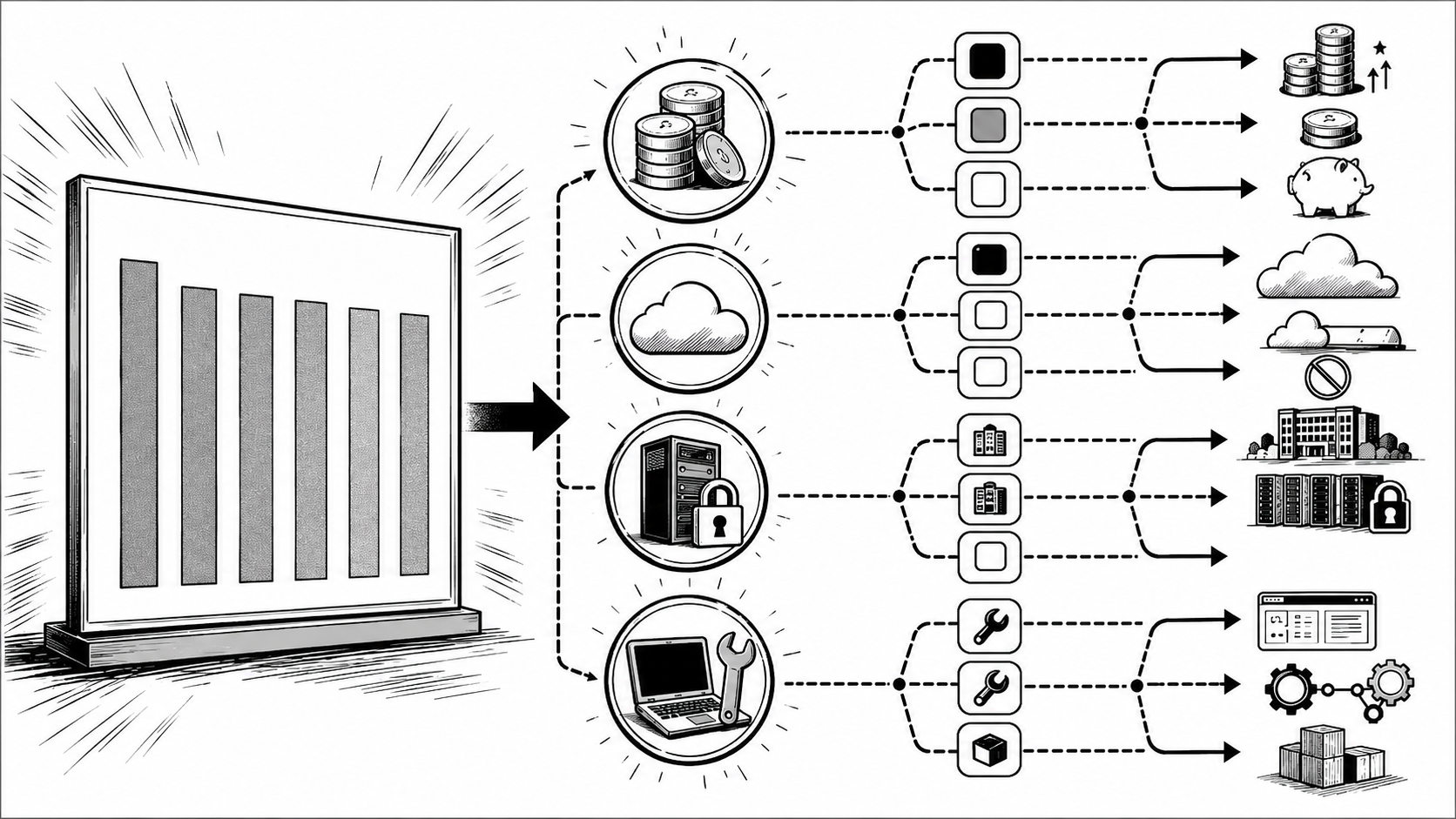
Whenever a new model emerges, benchmark scores, parameter counts, and rankings like 'world's Xth' are often highlighted first. However, what people actually implementing AI in the field are curious about is slightly different. It's more important whether customer documents can be input, if tens of thousands of daily transactions are cost-effective, and if it's possible to switch to a different model or hosting environment should issues arise.
By these standards, Kimi, DeepSeek, and Qwen are not in the same position. Kimi K3 is closer to aiming for high completeness in agent-type tasks involving long contexts, images, and documents. DeepSeek V4 emphasizes cost-efficiency in text-centric automation, code, and long text processing. Qwen 3.8 highlights office and coding tasks, but as it's still in the Preview stage with undisclosed weights, it's too early to definitively call it an enterprise standard model. (the-decoder, Alibaba takes on Kimi K3 with Qwen 3.8)
Kimi K3
When aiming for a high ceiling in complex document, image, and agent tasks.
DeepSeek V4
When cost-effectively handling text automation, code, and RAG.
Qwen 3.8
When considering its potential, but viewing it as a limited pilot due to undisclosed weights and its Preview status.
To add one more point, the impression that 'Chinese models are cheap' doesn't apply equally to all three models. DeepSeek is clearly engaged in a low-cost competition, but Kimi K3's official pricing is in the premium segment. Grouping cost-efficiency and performance ceiling in the same sentence can cloud judgment.
Therefore, it's better to ask 'what failure in our work would incur the greatest cost?' rather than 'which model is the best?' If you need to read design drafts and PDFs, the model's input method is crucial. If you're processing large volumes of repetitive summaries, token cost and speed are more important. This is why it's become difficult to choose a model based solely on a performance chart.
The performance competition is now shifting to code agent competition.
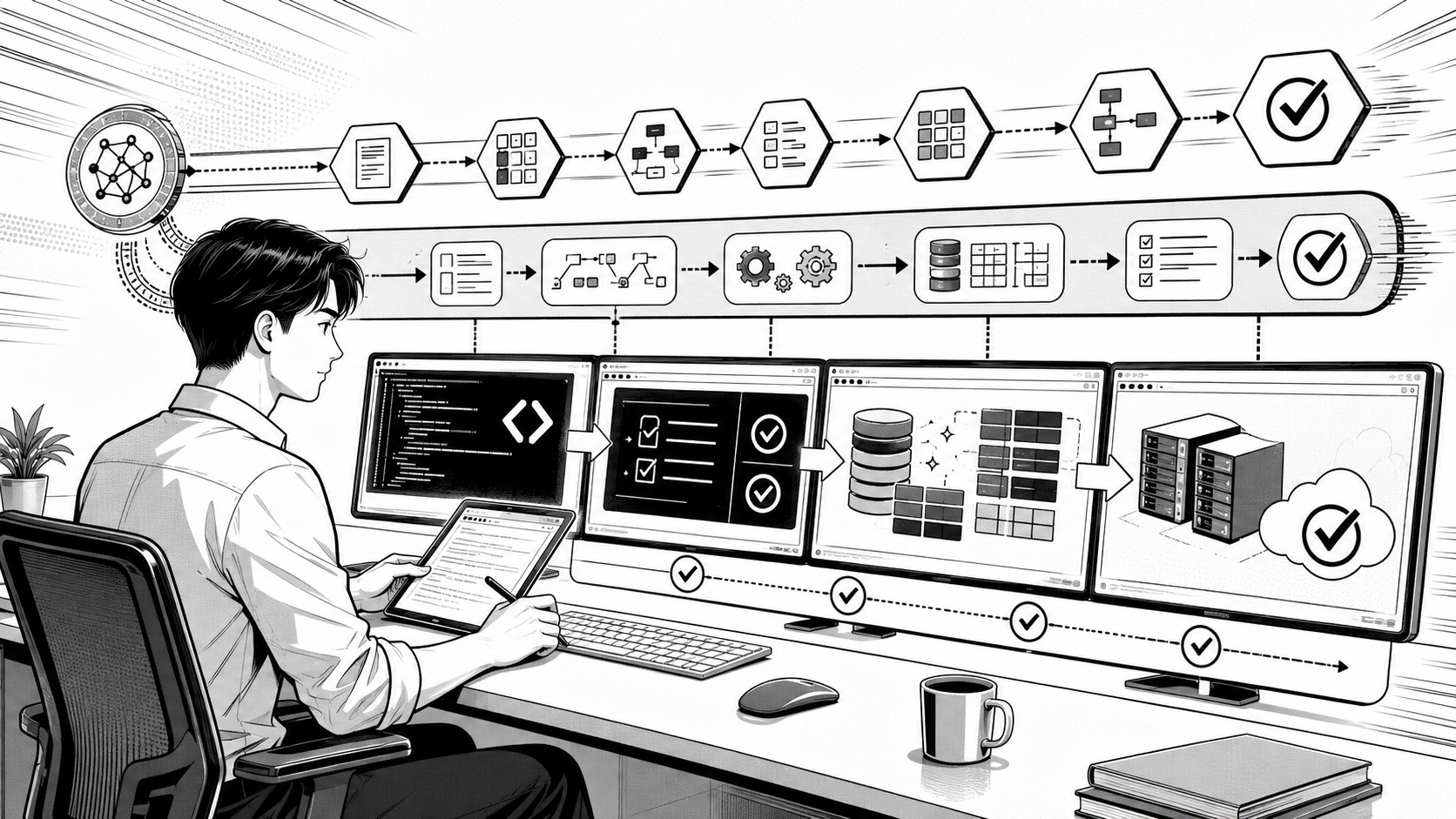
This change is most rapidly evident in development environments. Tools like Claude Code and Codex are no longer merely auxiliary functions that suggest a single line of code. They are evolving to read repositories, modify multiple files, run tests, organize data, and manage the deployment process.
Even looking at the usage data released by both companies, the direction of competition is clear. Anthropic stated that Claude Code runs for an average of 20 hours per week per user (this is the time the tool was running, not direct typing time)(Anthropic, How Claude Code is used in practice), and OpenAI explains that many individual Codex users in their sample are entrusting it with tasks that would likely take over an hour (OpenAI, How agents are transforming work). However, since these are internal company figures, it's more accurate to view them as a signal that code agents are beginning to handle longer and more complex tasks, rather than as overall market share.
The emergence of Chinese models adds another variable to this competition. While Claude Code and Codex compete over developers' work environments, models like Kimi and DeepSeek are becoming new options for what cost and infrastructure to run those agents on. Ultimately, the competition is less about 'model vs. model' and more about an ecosystem competition encompassing models, tools, pricing, and deployment environments.
A bigger change is 'where' models can be placed.
A notable aspect of this competition is that models are no longer confined to a specific company's chatbot. Some models can be used directly via official APIs, while others can be deployed in dedicated environments through specialized hosting. For models with open weights, there's also the option to run them in a company's cloud or on-premise environment, depending on the conditions.
Even for models from the same family, the data path, cost, and responsibility for failures differ when used in a public service, a corporate private network, or self-managed. Now, simply saying 'we use a Chinese model' is insufficient to describe the actual choice. One must also consider which model is deployed in which environment.
The trend of Chinese models rapidly growing in prominence within the open-model ecosystem is clear. However, this doesn't necessarily mean an immediate defeat for US models. Closed-source frontier models still hold a strong position in terms of top performance and enterprise support systems. Nevertheless, it's evident that the increasing number of options is shifting price benchmarks and negotiation power.
Performance competition is also spilling over into political and trade issues.

The US perspective on Chinese AI is also changing. The Trump administration recently raised suspicions that China-based companies engaged in unauthorized extraction, or 'distillation,' of US AI model capabilities, stating they would consider crackdowns and penalties (PBS NewsHour, Trump administration vows crackdown on Chinese companies ‘exploiting’ AI models made in U.S.). Discussions are also ongoing in Congress to create procedures for imposing sanctions on such model extraction activities.
There's a distinction to be made here. It's inaccurate to currently label this as a 'complete ban on Chinese AI use.' A policy to block all open-weight models has not been finalized, and there are voices within the US government that acknowledge the innovative value of open models. However, the risk that corporate options could suddenly narrow if IP infringement, security concerns, supply chain issues, tariffs, and sanctions combine has become clear.
Therefore, from a corporate perspective, comparing only model performance is insufficient. It's necessary to also design for whether the structure is directly linked to a specific country or provider, if it can be moved to another hosting path, and if alternatives can be arranged when contract and data processing conditions change. More important than the AI model's nationality is ultimately where the data and operational responsibility actually lie.
Open-weight doesn't mean it's easy to run in-house.
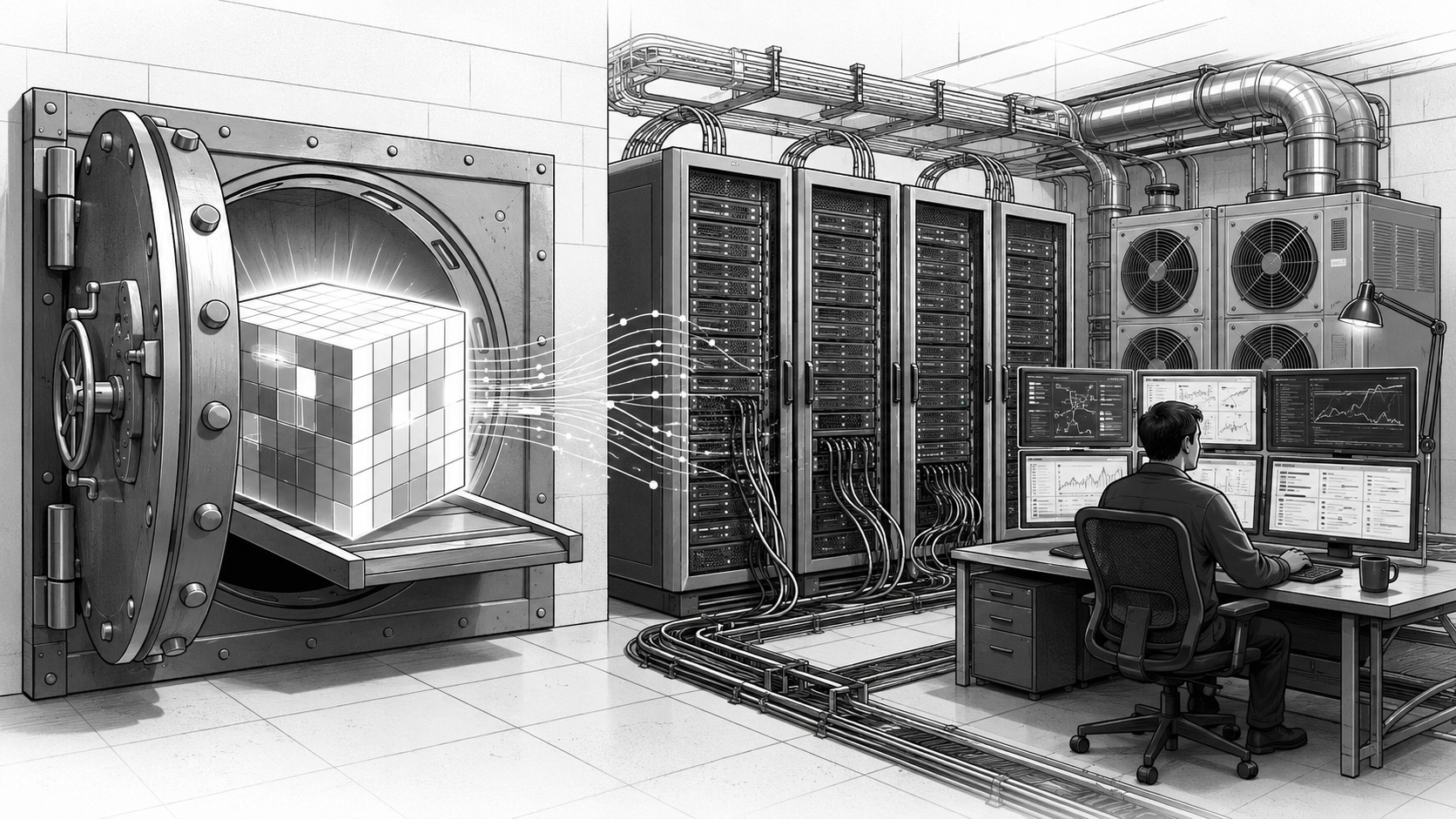
There's a common misconception here: that since model weights are public, anyone can download and run them freely. However, being legally able to use and access model files is different from being able to reliably operate them as an enterprise service.
Operating a very large model requires more than just GPUs. It also necessitates memory and network infrastructure to maintain long contexts, security controls, monitoring, updates, and operational personnel to respond to failures. For organizations with low or fluctuating usage, an API is often more economical. Conversely, if there's a lot of sensitive data and sufficiently high usage, dedicated hosting or an on-premise environment can be compelling.

Therefore, the value of open-weight is less about simply being 'free' and more aboutinterchangeability.This is because if one provider isn't suitable, other hosting paths can be explored, and in the long term, one isn't completely locked into a specific model API.
More important than nationality is the data path.
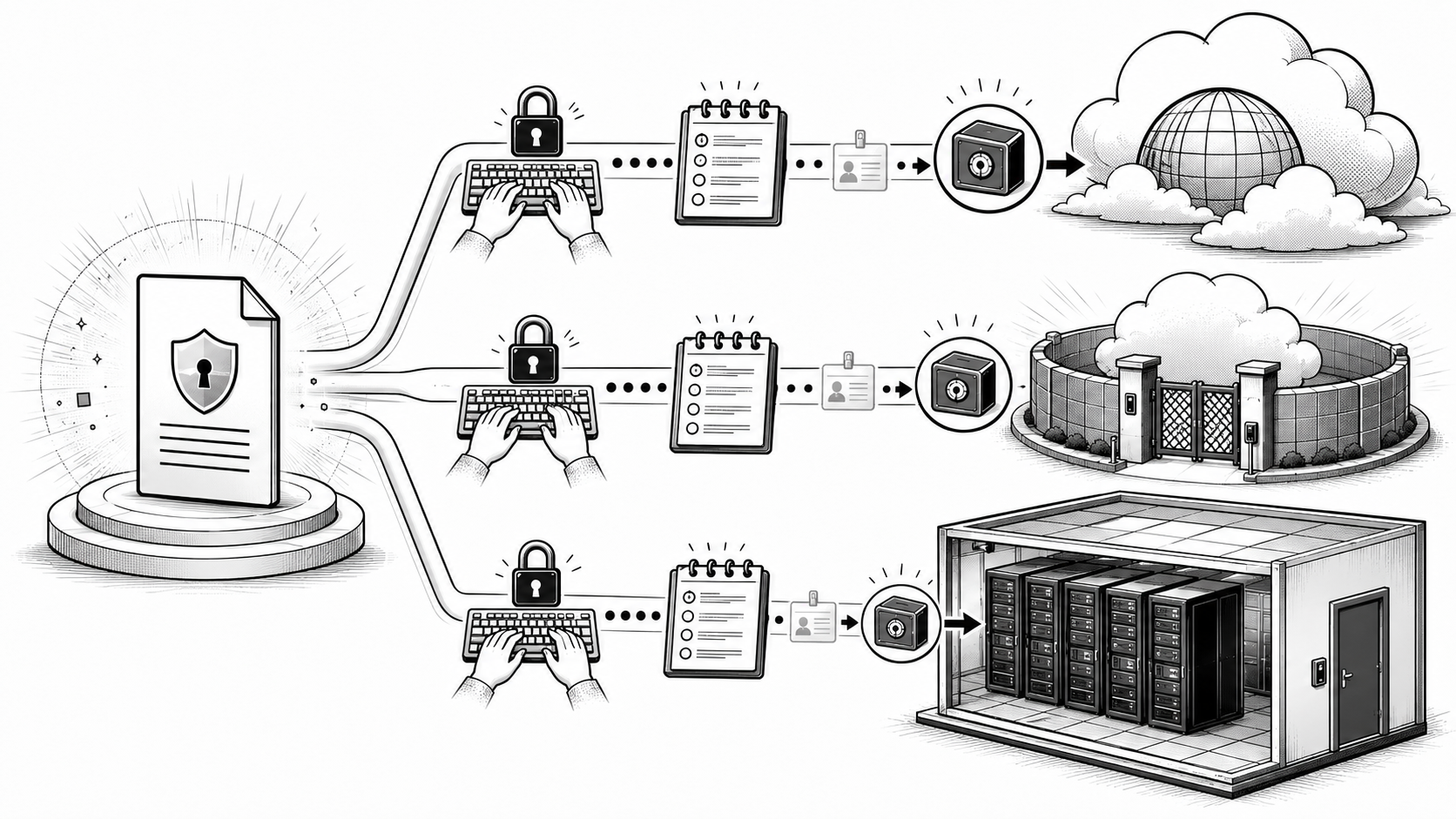
Especially for businesses, there's something to check before the model name: where prompts, attachments, and logs are stored (which country, which server), whether they are used for model training, if the region can be fixed, and if support is available when issues arise.
For example, DeepSeek states in its official privacy policy that personal information is directly collected, processed, and stored within China, and users must explicitly opt out if they do not wish for it to be used for training (DeepSeek Privacy Policy, updated February 10, 2026).
This question doesn't apply only to Chinese models. It should be asked of all AI services using the same criteria. However, with the increasing options for open-weight and multi-hosting, there's more room to choose an answer. Directly using a consumer chatbot, using a managed endpoint on a non-Chinese cloud, or using it within a company's VPC are entirely different operational approaches, even if the same model is used on the surface.
Korea is also preparing for competitiveness beyond models.

The atmosphere in Korea suggests that this trend is not simply viewed as a matter of 'which foreign model to use.' On the 24th of this month, the 'San Francisco AI Declaration' presented a cooperation plan that bundled semiconductors, AI data centers, physical AI, and talent development (Republic of Korea Policy Briefing, San Francisco AI Declaration). The recurring keywords from meetings between domestic companies and global big tech firms were not just about a single model, but infrastructure and supply chains.
This clearly illustrates Korea's position. In the global AI competition, we don't necessarily have to beat every single model directly. How we connect memory, semiconductors, data centers, manufacturing sites, and service application capabilities can be a more realistic competitive advantage. The rise of Kimi and DeepSeek prompts Korea to ask 'what combination will last longest for our industry?' rather than 'which model is the best?'
So, what should you choose now?
If you're an individual user, it's better to compare new models as tools suited for your tasks, rather than seeing them as magical chatbots that provide all the answers. Try assigning the same proposal to three models and compare not just the output, but also the number of revisions and response speed; you'll see the differences.
For businesses, you can start even simpler. First, select 10-20 non-sensitive, representative tasks and compare models under identical prompt and tool conditions. Then, add considerations for cost, data classification, disaster recovery, and alternative paths. Rather than choosing a single enterprise standard model from the outset, designing a routing structure that uses different models for different tasks might be more realistic.
If you have a lot of document/code automation: It's best to look at token cost and throughput first.
If you have a lot of image, PDF, or complex agent tasks: You should verify actual input and tool call quality through a pilot.
If sensitive data is key: You should check storage location and contract terms before the model name.
If considering self-hosting: You must include not only GPU costs but also operational personnel and liability for failures in the TCO.
What Chinese AI is changing is choice, not just who wins or loses.

It's too early to say that Chinese AI has completely defeated US AI. The competition surrounding top performance, safety, enterprise support, and agent platforms continues. However, it's clear that the market's baseline is shifting. The premise that good models must only be used through expensive, single APIs is weakening.
In the future, the important skill won't just be choosing the most famous model. The ability to design tasks, costs, data, and deployment paths together is likely to become more crucial. The next phase of AI competition will be determined not by who is number one, but by who can use AI more responsibly across a wider range of environments.