Everyone Is the Group Project Leader Now
The Era of Free-Riding Is Over
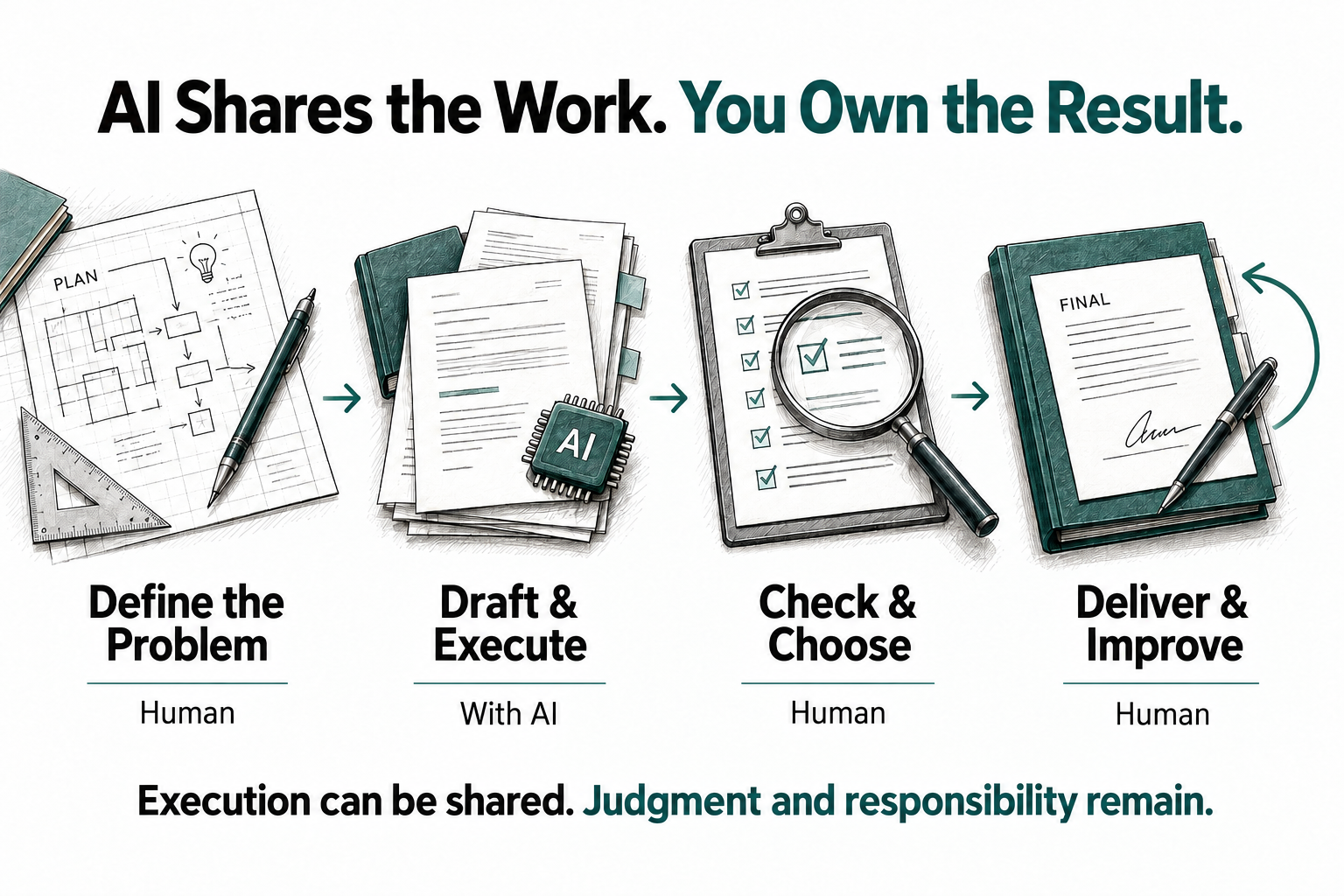
Execution can be shared. Judgment and responsibility remain.
Sources: Greg Isenberg · What does it actually mean to be AI native? (2026-06-09) · Lenny Rachitsky · My biggest takeaways from Molly Graham (2026-09-29)
USLab's conceptual diagram based on the cited discussions. The stages do not represent measured shares of work time or staffing.
Remember the Last Night of a Group Project?
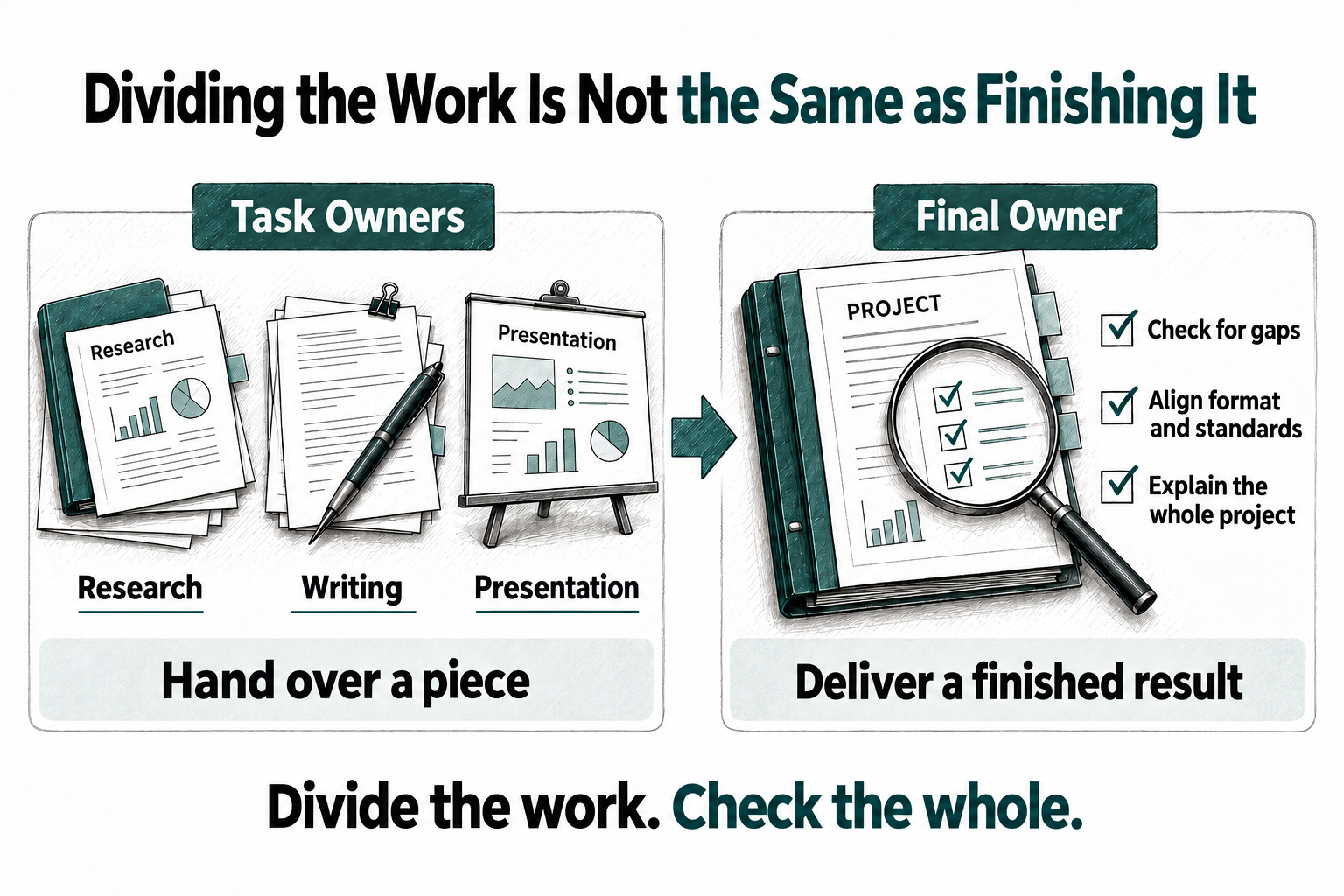
Divide the work. Check the whole.
Sources: Elena Verna · You don’t have to be a manager. (2024-08-15) · Lenny Rachitsky · My biggest takeaways from Molly Graham (2026-09-29)
An explanatory comparison using the group-project analogy, not statistics about actual task allocation in every team.
If you did group projects at university, you probably know the scene. You divide the tasks, gather material, and prepare a presentation. As the deadline approaches, though, the same person usually ends up holding everything together: the group leader who fills the gaps, fixes mismatched documents, and messages the teammate who has gone quiet.
Everyone's name goes on the project, but someone has to take responsibility until the end. You may have promised yourself you would never lead another one.
At work, this coordination becomes a manager's job. Someone assigns tasks, checks progress, and turns several people's output into a result. In many organizations, promotion means taking on people management. But not everyone wants that job. Some people want to grow by continuing to do the work they are good at.
Working with AI makes that choice more complicated. You now have a teammate at your desk that can research, draft, and analyze. Deciding who does what and checking the results still falls to you. You do not remember volunteering to lead, yet here you are at the submit button.
Sources: Elena Verna · You don’t have to be a manager. (2024-08-15) · Lenny Rachitsky · My biggest takeaways from Molly Graham (2026-09-29)
The group-project scene is an analogy. The cited discussions address management as a career choice and the supervision of AI work.
An AI Teammate Has Arrived at Your Desk
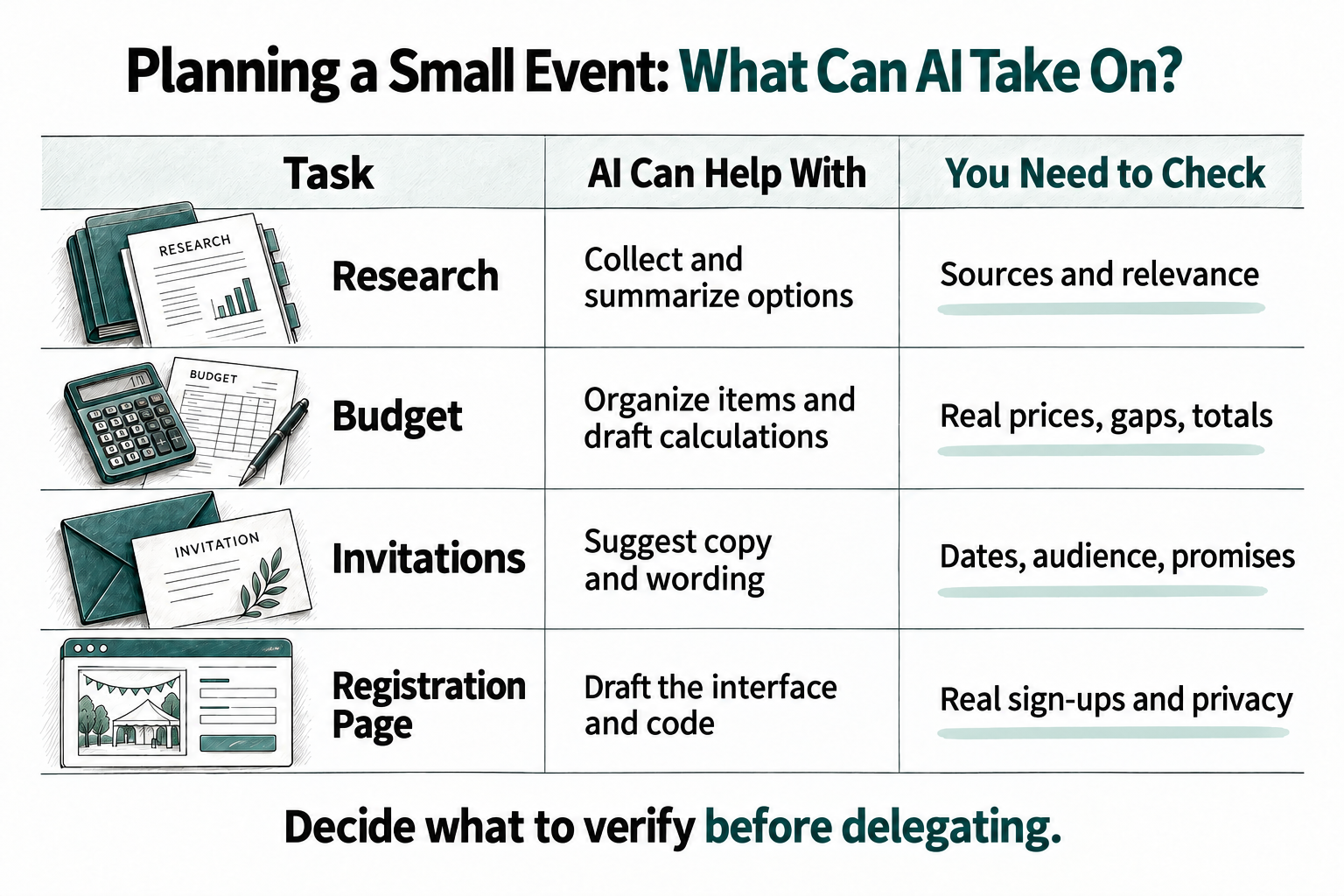
Decide what to verify before delegating.
Sources: Greg Isenberg · What does it actually mean to be AI native? (2026-06-09)
USLab's event-planning example. It does not guarantee AI accuracy or a particular level of automation.
Imagine planning a small event. You need to research similar events, calculate a budget, write invitations, and build a registration page. Work that once felt too much for one person can become something you start with AI-generated drafts of each task.
That takes more than a one-line request. You need to explain the event's purpose, audience, available budget, and non-negotiable constraints. When the results arrive, you have to check whether they fit your event and revise what is missing.
Greg Isenberg describes this shift with the phrase 'Everyone is a manager now.' His argument is that as AI takes on execution, people take a larger role in deciding what to do and whether the result is good enough.
A project does not succeed simply because your AI teammates have done a lot of work. If an invitation addresses the wrong audience or the budget is wrong, someone still needs to check the result and change direction.
Sources: Greg Isenberg · What does it actually mean to be AI native? (2026-06-09)
This section summarizes Greg Isenberg's argument. The event-planning scenario is the author's example.
Your Scope Can Grow Without a Promotion
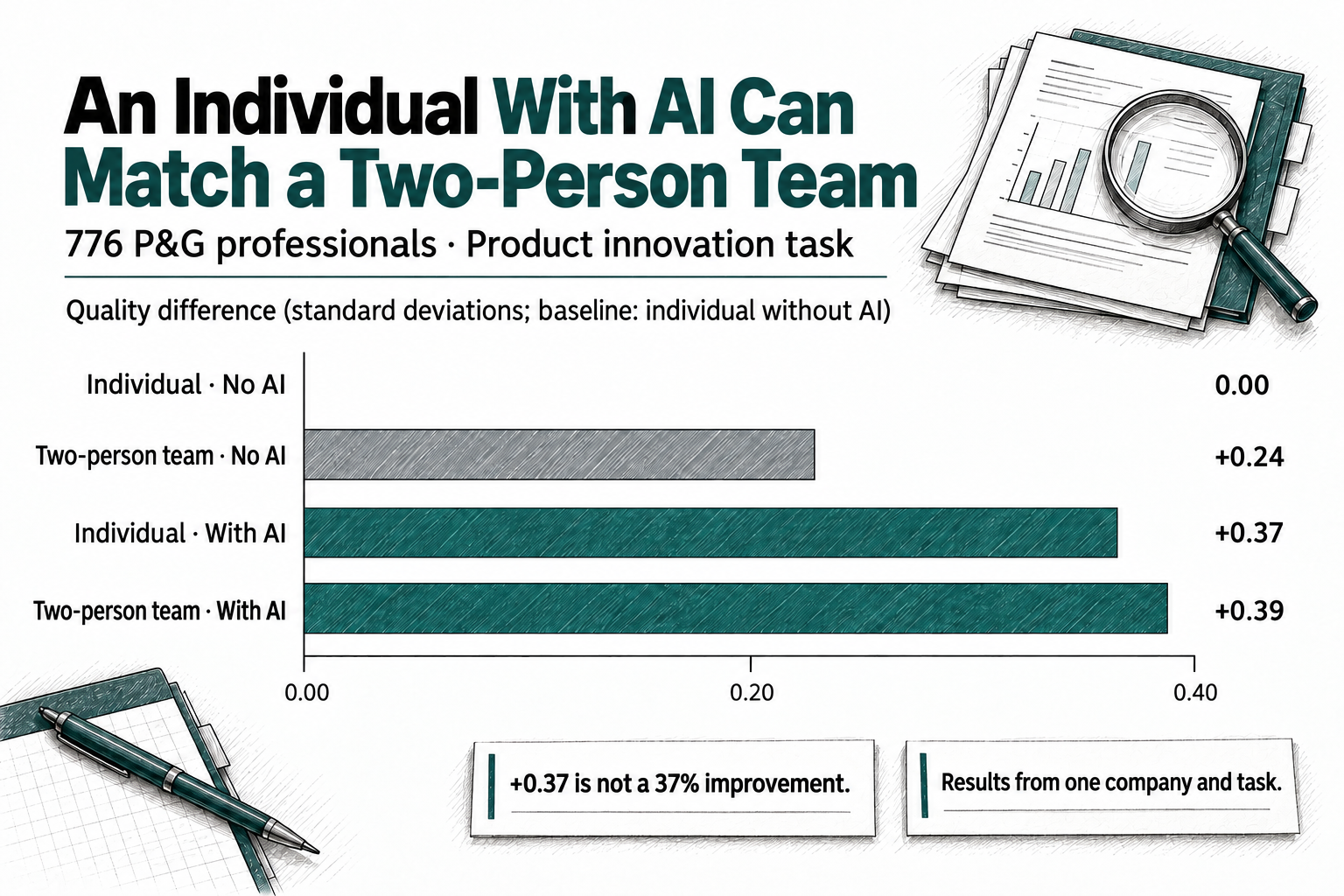
The experiment suggests AI can give individuals some of the benefits of collaboration.
Sources: Fabrizio Dell’Acqua et al. · The Cybernetic Teammate: A Field Experiment on Generative AI Reshaping Teamwork and Expertise (2025-03-21) · HBS AI Institute · The Cybernetic Teammate: How AI is Reshaping Collaboration and Expertise in the Workplace (2025-04-02)
2025 research materials. Standard-deviation units put quality differences on a common scale; +0.37 does not mean a 37% improvement. The hand-drawn bars illustrate reported point estimates, not the certainty of differences between conditions. Results from one company and task cannot be generalized to all work.
This shift creates opportunities, too. You can try work that previously had to wait for someone else's availability or a new hire. That is welcome news for anyone who has had an idea but no team to start it.
Elena Verna describes this through the idea of a 'high-impact IC.' An IC, or individual contributor, does hands-on work without managing people. Here, the role goes beyond completing one assigned piece: it means driving a project the business needs from start to finish.
She describes returning to an individual-contributor role after leading growth at Lovable. She built and shipped an enterprise pricing page herself, a task that she says would previously have required a product manager, designer, and engineer working together.
Her experience does not apply directly to every company or task. It does suggest that individuals may have more ways to increase their impact. You may be able to take on a larger problem while continuing to make things yourself.
Sources: Elena Verna · IC work is the new career flex (2026-05-14) · Fabrizio Dell’Acqua et al. · The Cybernetic Teammate: A Field Experiment on Generative AI Reshaping Teamwork and Expertise (2025-03-21) · HBS AI Institute · The Cybernetic Teammate: How AI is Reshaping Collaboration and Expertise in the Workplace (2025-04-02)
This is the author's account of her own experience, not a general performance finding across jobs. The diagram presents a separate P&G experiment; it does not measure Elena Verna's individual results.
Why Can Delegating Work Feel More Tiring?
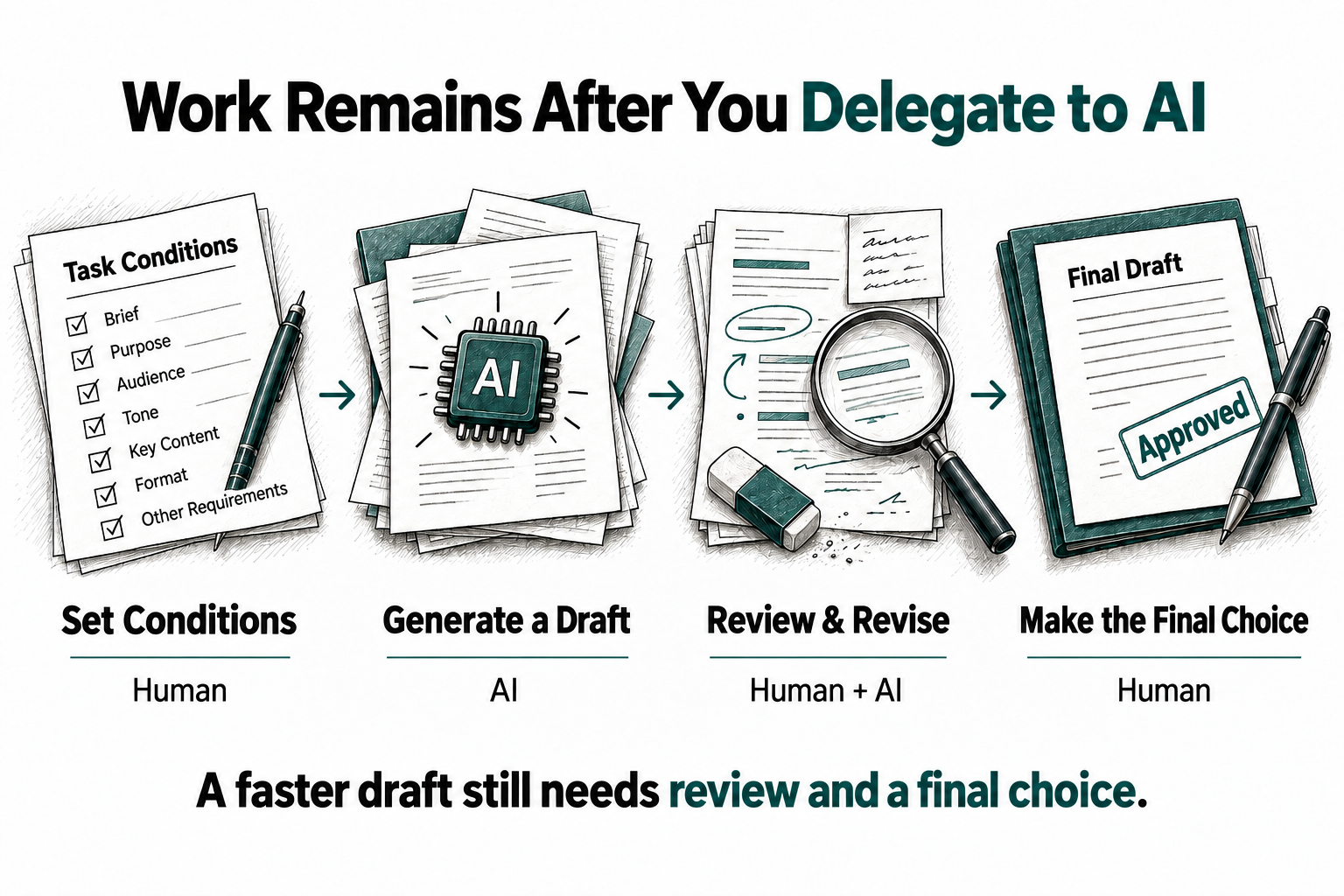
A faster draft still needs review and a final choice.
Sources: Lenny Rachitsky · My biggest takeaways from Molly Graham (2026-09-29)
A conceptual workflow about supervision and accountability. Stage widths do not represent shares of time.
More teammates should mean less work for the leader. But what if their research uses different standards, overlaps, or contains incorrect numbers? After dividing the work, you need extra time to check and reconcile it.
This issue also appears in Lenny Rachitsky's summary of his interview with Molly Graham. Even when you hand work to AI, supervision and responsibility for the final result remain with a person. Delegating a task does not automatically transfer the mental burden.
Faster drafts can mean more material to read and judge. You still have to decide which answer is right, which version to use, and how much to ask AI to redo. These responsibilities can reach people who chose hands-on work because they did not want management roles.
In Lenny's summary, Molly also addresses the grief and fatigue that change can bring. Letting go of work you were good at and learning a different way to work can reduce satisfaction, even apart from productivity. People need time and support to adjust.
Sources: Lenny Rachitsky · My biggest takeaways from Molly Graham (2026-09-29) · Lenny Rachitsky · Molly Graham · The grief, loneliness, and burnout sweeping through the tech industry right now (2026-09-27)
This section relies on the host's public summary rather than the full interview transcript.
The Era of Free-Riding Is Over
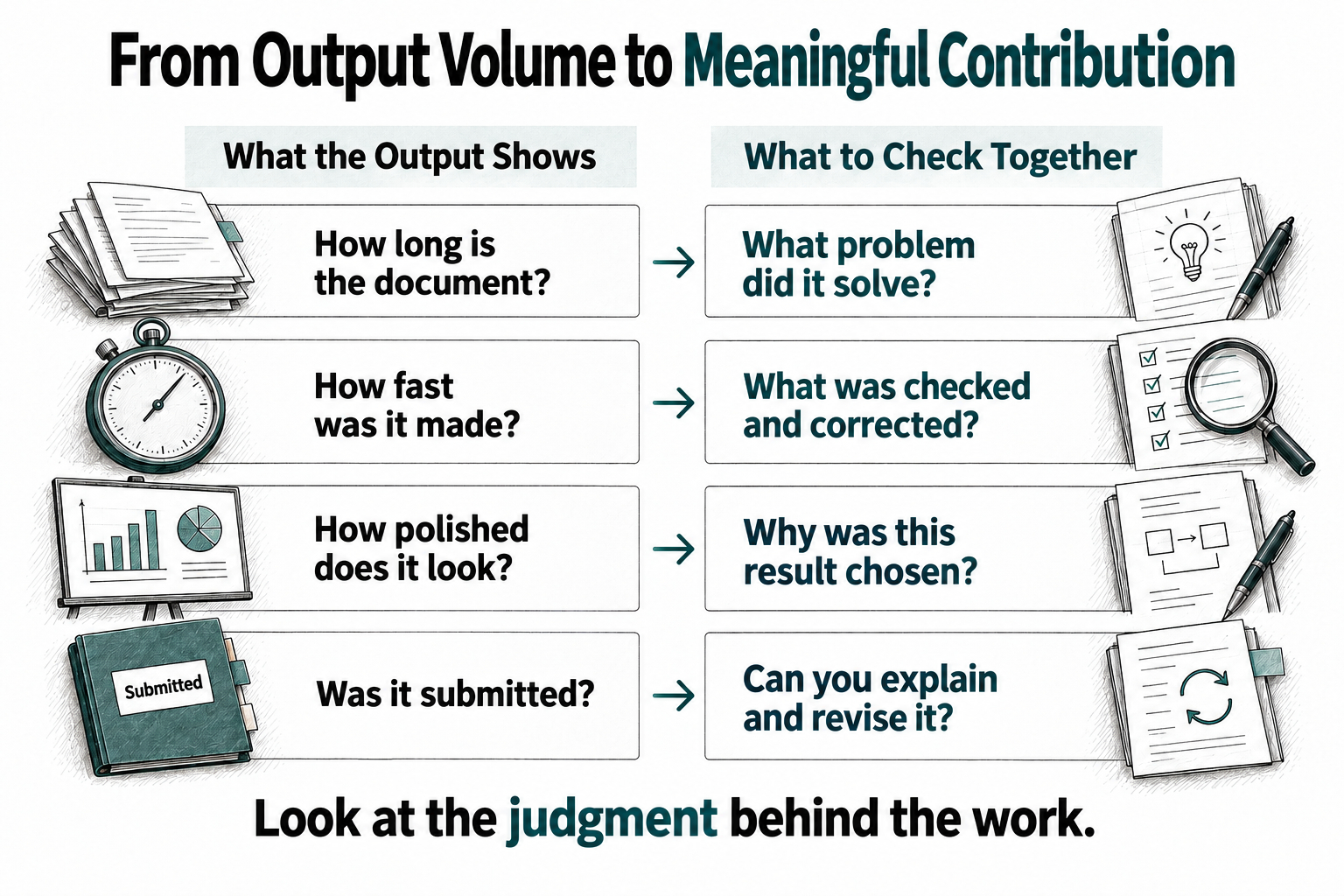
Look at the judgment behind the work.
Sources: Greg Isenberg · What does it actually mean to be AI native? (2026-06-09) · Lenny Rachitsky · My biggest takeaways from Molly Graham (2026-09-29)
USLab's proposed evaluation criteria, not statistics or research showing that AI has reduced free-riding.
Free-riding in a group project starts with waiting for someone else to cover the gap. You accept a role, contribute no result, and put your name on the finished assignment. Access to AI teammates gives you more ways to start and move your own share of the work forward.
That does not mean AI automatically ends free-riding. It can create a new version: submitting a pile of AI-generated material. The output looks convincing, but the person does not understand it, has not checked its sources, and cannot explain it when questioned.
We need to ask more specific questions about what counts as a contribution. What problem did the person own? What evidence did they check? What did they correct? Is the final result useful? A long, polished document tells us little about the judgment behind it.
That is the standard this article's subtitle calls for. It is too early to read it as a declaration that AI has eliminated free-riding. What we should end is the practice of claiming the credit while leaving the understanding and verification to someone else.
Sources: Greg Isenberg · What does it actually mean to be AI native? (2026-06-09) · Lenny Rachitsky · My biggest takeaways from Molly Graham (2026-09-29)
This is the author's interpretation of discussions about AI supervision and accountability, not a research finding that free-riding has decreased.
Good Leaders Check Their Teammates' Answers
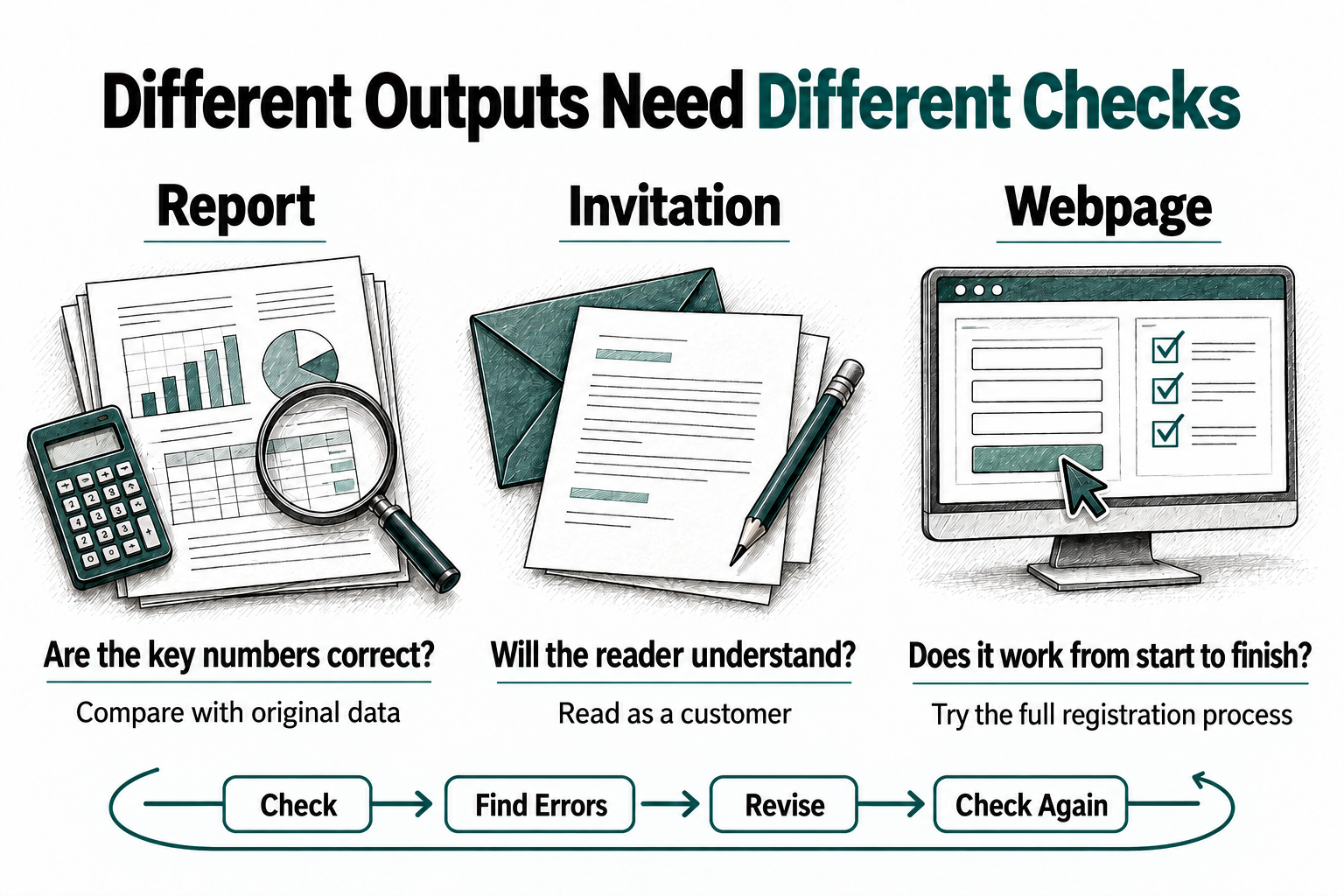
Check, find errors, revise, and check again.
Sources: François Chollet · Delegate coding. Never delegate understanding. (2026-09-22)
USLab's suggested checks based on discussions about retaining understanding. This is not an exhaustive verification checklist.
The ability to delegate to AI is connected to the ability to recognize good work. You need to spot incorrect numbers, identify sentences customers will struggle to understand, and reject suggestions that do not fit your situation.
François Chollet argues that even when you delegate coding, you must not delegate understanding. If AI replaces the way you used to learn how the code works, you need new documentation and working habits to preserve that understanding.
The same idea can apply elsewhere. If AI drafts a report, check the original sources for the key numbers. If it writes an invitation, read it from a customer's perspective. If it builds a webpage, try the entire process from registration to completion. Defining what the result must do makes the checks clearer.
Judgment also grows through hands-on experience. Simply asking beginners to review AI output is not enough. They need chances to make things themselves, compare results, and correct mistakes. Learning to lead well still requires time spent doing the work.
Sources: François Chollet · Delegate coding. Never delegate understanding. (2026-09-22) · Lenny Rachitsky · My biggest takeaways from Molly Graham (2026-09-29)
This section draws on Chollet's coding argument and Lenny's summary on judgment and quality. The suggested checks and learning practices are the author's recommendations.
Leaders Need Authority and Recognition, Too
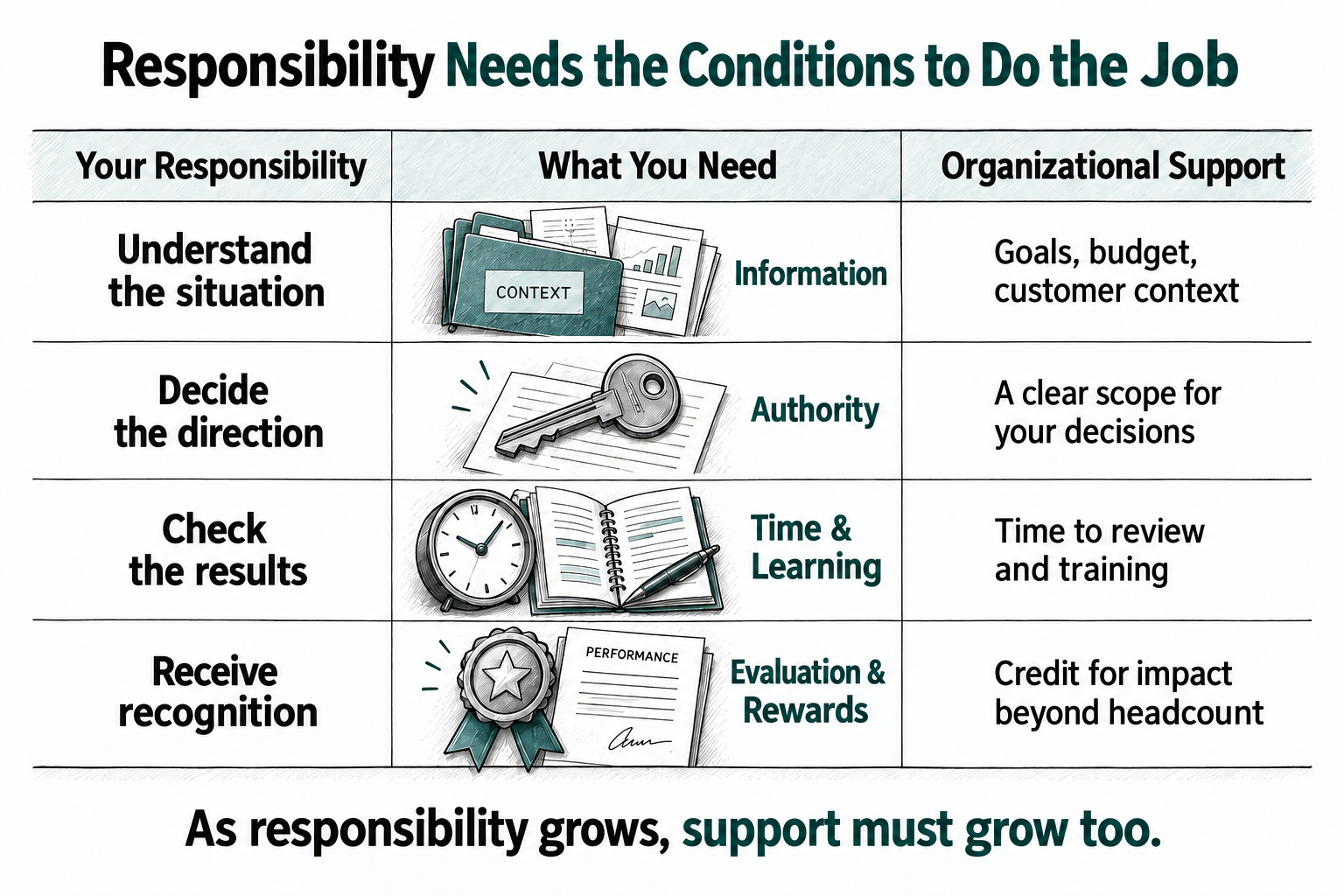
As responsibility grows, the conditions to do the work must grow too.
Sources: Elena Verna · Your AI strategy has a trust problem, not a tooling problem (2026-06-05) · Elena Verna · IC work is the new career flex (2026-05-14)
A synthesis of discussions about access to information, autonomy, and individual-contributor careers, together with USLab's recommendations.
How can you be accountable for a result without the information or authority you need? If you are told to run a successful event without knowing the budget, or every small change needs approval, extra AI teammates will not remove the bottleneck.
Elena Verna argues that AI tools cannot unlock individual execution if access to information and autonomy stay unchanged. People need to understand the situation and make decisions for themselves before the tools can translate into results.
Organizations should first define the scope of ownership, then provide the information and authority to make decisions within it. People also need time to check the results. If their role grows, evaluation and rewards should reflect that contribution.
Elena's proposed individual-contributor path connects to this point: recognize the business results someone creates, independently of how many people they manage. If responsibility increases while everything else stays the same, calling everyone a leader amounts to a promotion in name only.
Sources: Elena Verna · Your AI strategy has a trust problem, not a tooling problem (2026-06-05) · Elena Verna · IC work is the new career flex (2026-05-14)
This section draws on the author's proposals about information, autonomy, accountability, and the impact of individual contributors.
Submitting Work Under Your Own Name
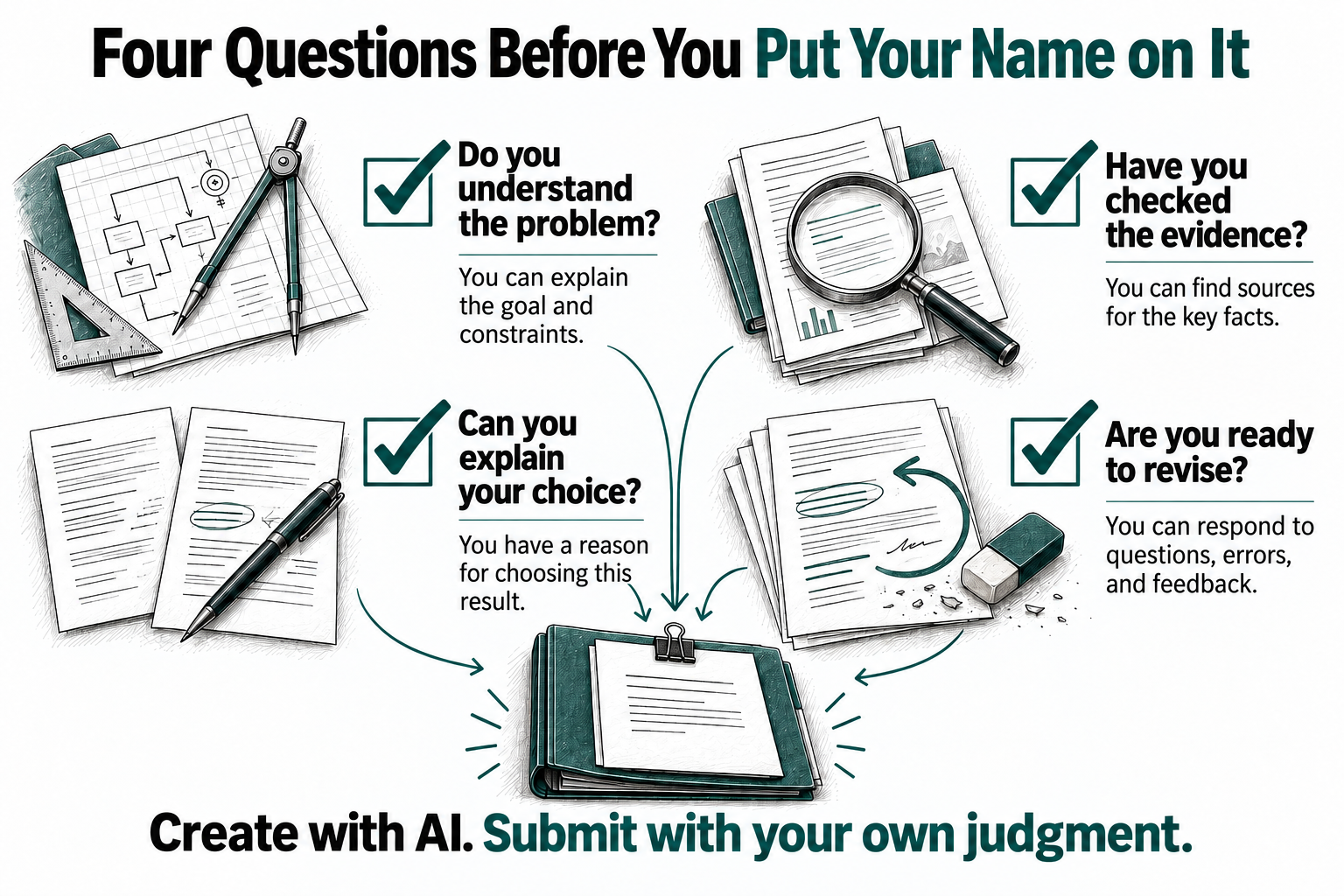
Create with AI. Submit with your own judgment.
Sources: Greg Isenberg · What does it actually mean to be AI native? (2026-06-09) · François Chollet · Delegate coding. Never delegate understanding. (2026-09-22)
USLab's pre-submission questions based on the article's conclusion.
AI can make it more feasible for one person to own the full process: find a problem, choose an approach, execute it, and check the result. Work that once needed several people's help may become something you can try yourself.
Taking responsibility for the whole job does not need to mean taking on every job in the company alone. It means following the problem you own through to the result. Work with specialists where you need help, correct what is wrong, and bring the result to a state where people can actually use it.
Even in a world where everyone leads, collaboration still matters. What changes is the scope of contribution expected from each person. You should be able to explain what you tried, what decisions you made, and what result you created.
We need to learn how to work with AI while taking responsibility for our own problems from start to finish. Putting your name on a result means taking on the work of understanding it, explaining it, and being accountable for it.
Sources: Greg Isenberg · What does it actually mean to be AI native? (2026-06-09) · Elena Verna · IC work is the new career flex (2026-05-14) · Elena Verna · Your AI strategy has a trust problem, not a tooling problem (2026-06-05)
This is the author's conclusion connecting the preceding discussions. 'Everyone is a leader' is a metaphor, not a statistical claim that every occupation has already changed.
Sources and References
Elena Verna · You don’t have to be a manager. (2024-08-15)
The author's own discussion of management and individual-contributor career paths.
Greg Isenberg · What does it actually mean to be AI native? (2026-06-09)
A post arguing that everyone becomes a manager in AI-native work. Date shown in Korea Standard Time.
Elena Verna · IC work is the new career flex (2026-05-14)
A discussion of high-impact individual contributors and the author's personal experience at Lovable.
Lenny Rachitsky · My biggest takeaways from Molly Graham (2026-09-29)
The host's public summary of his interview with Molly Graham. Date shown in Korea Standard Time.
The official interview page. Detailed text is subscriber-restricted; this article relies on the public summary.
François Chollet · Delegate coding. Never delegate understanding. (2026-09-22)
A post about delegating coding while retaining understanding. Date shown in Korea Standard Time.
Elena Verna · Your AI strategy has a trust problem, not a tooling problem (2026-06-05)
A discussion of access to information, autonomy, decision-making authority, and accountability.
2025 field experiment with 776 P&G professionals completing a product-innovation task, comparing individuals and two-person teams with and without AI.
The research institute's official explanation. Quality differences of 0.24, 0.37, and 0.39 are in standard-deviation units relative to individuals without AI, not percentages.